
 EN
EN
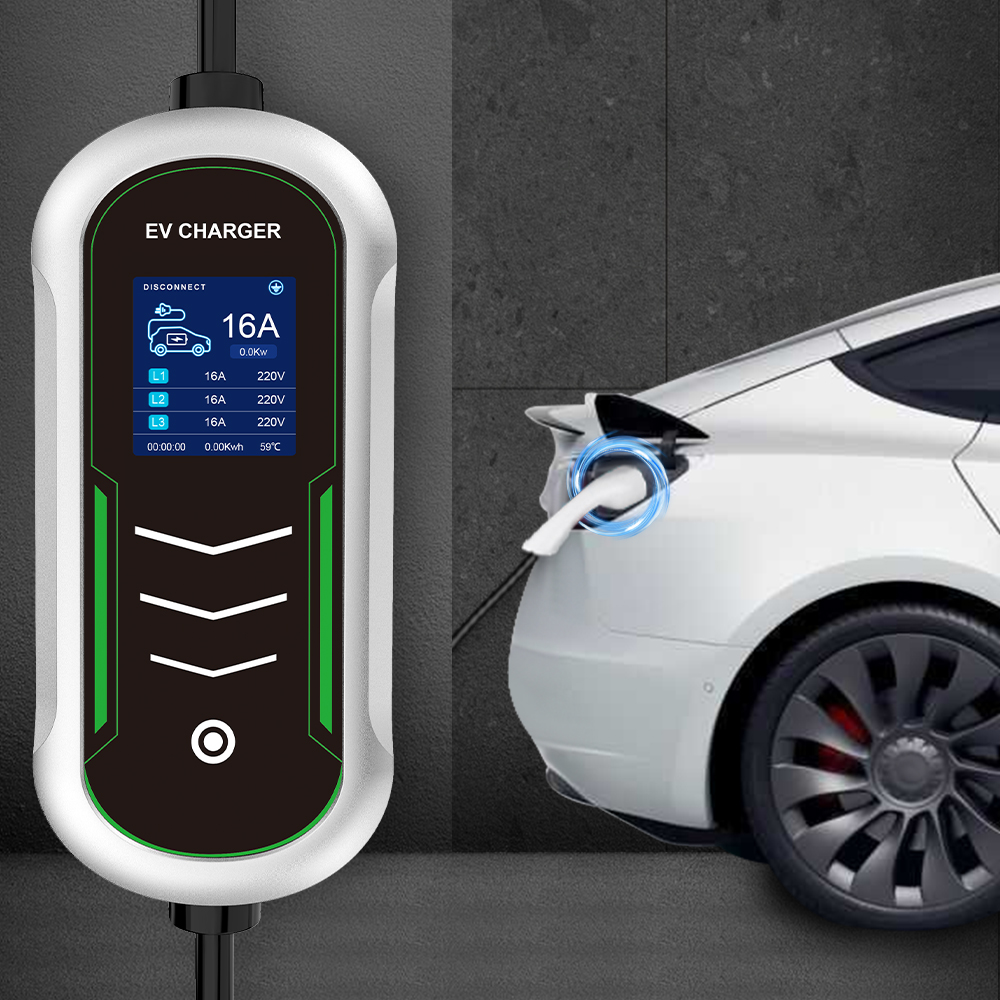
Real-World Charging Efficiency of a Type 2 Portable EV Charger
How AC efficiency is measured for Type 2 portable EV charger units
When looking at how efficient Type 2 portable EV chargers really are, we basically measure what gets into the car battery compared to what comes out of the wall socket. There are several factors that eat away at this efficiency including losses from the car's own onboard charger system, resistance in the cables, and heat generated during operation. Labs test these things under pretty strict conditions too - usually around room temperature (about 25 degrees Celsius), with steady electricity coming in, and batteries somewhere between 20% and 80% charged so they don't skew results. Take a look at numbers: someone pulls 10 kilowatt hours from their home outlet, but only sees 8.8 actually making it into the battery. That means the charger works at roughly 88% efficiency. These tests help compare different chargers fairly and show just how much difference good engineering makes when it comes to actual performance on the road.
Typical efficiency range: 85–92% – benchmarked against wallboxes and DC fast chargers
Portable Type 2 chargers typically achieve 85–92% efficiency – slightly below permanently installed wallboxes (88–94%) and significantly under DC fast chargers (92–96%). Three engineering constraints drive this gap:
- Thermal limitations: Compact housings restrict heat dissipation, increasing resistive losses at higher currents
- Cable compromises: Longer, flexible cables common in portables introduce more resistance than fixed installations
- Conversion architecture: Unlike DC fast chargers, portable AC units rely entirely on the vehicle’s OBC, incurring unavoidable AC-to-DC conversion losses
Under optimal conditions – such as a 32A portable Type 2 charger operating at 240V – efficiency can reach 92%, narrowing the gap with wallboxes. This performance delivers 30–35 miles of range per hour while preserving the portability advantage critical for road trips, temporary housing, or multi-vehicle households.
Key Factors That Reduce Efficiency in a Type 2 Portable EV Charger
Vehicle onboard charger (OBC) limitations as the dominant bottleneck
When it comes to how fast electric cars actually charge in practice, the onboard charger or OBC plays by far the biggest role. Most regular electric vehicles come with OBCs that max out between around 7 and 11 kilowatts. Some fancy models can go up to about 19 kilowatts though. Now imagine having a Type 2 portable charger rated at 7.6 kW connected to a car whose OBC can only handle 3.6 kW. What happens? Well, roughly half of that electricity gets wasted as heat instead of going into the battery. That's why two seemingly identical portable chargers might perform so differently. Take the Kia EV6 for instance, which charges at about 40 kilometers per hour when plugged in, versus something like the basic Nissan Leaf that barely manages 25 km/h under similar circumstances. Car manufacturers tend to focus on keeping costs down and reducing vehicle weight rather than boosting OBC capacity, so this limitation stays pretty much unavoidable across all AC charging systems.
Power source constraints: circuit voltage (120V/240V), amperage (16A–32A), and outlet quality
Portable charger efficiency degrades sharply when the power source falls short of specifications:
- Voltage variance: 120V circuits reduce efficiency by 12–18% compared to 240V due to higher current demands and longer runtime, which compound thermal losses
- Amperage deficits: Running a 32A charger on a 16A circuit wastes 7–9% energy through extended duration and increased copper resistance
- Outlet degradation: Worn receptacles can cause voltage drops up to 8V below standard, raising resistance losses by 15% versus industrial-grade sockets
| Power Source Issue | Efficiency Impact | Mitigation Strategy |
|---|---|---|
| Under-voltage (110V vs 240V) | 18% reduction | Prioritize 240V circuits |
| Low amperage (16A vs 32A) | 9% reduction | Verify circuit breaker ratings |
| Poor outlet contact | 15% resistance loss | Replace outdated receptacles |
These constraints interact with OBC limitations – especially when charging from residential, temporary, or unconditioned power sources – making source verification a prerequisite for reliable efficiency.
Type 2 Connector Design and Its Role in Portable EV Charger Efficiency
Why single-phase operation defines most Type 2 portable EV charger models – and its efficiency implications
Type 2 portable EV chargers mostly go with single-phase operation since they need to work with what's available in most homes and public places these days. Three-phase power just isn't something people typically find in their garages or at coffee shops after all. Even though those seven pins on the Type 2 connector can handle either configuration, portable models stick to single-phase so regular folks can simply plug them in wherever there's an outlet. Single-phase does run around 85 to 92 percent efficient, which is actually pretty good considering it falls short of three-phase performance when things get heavy loaded. But this isn't really about being inefficient per se. The main issues come down to how balanced the phases are and some extra resistance during transmission. What helps here are those communication pins built into the connector itself. They let the charger adjust current dynamically, cutting down on wasted energy when voltages fluctuate or components start getting too hot. So basically, manufacturers have made a choice to give up a little bit of efficiency for something much more important in practice universal access. Drivers can charge safely and effectively almost anywhere there happens to be a matching socket, which beats having super efficient equipment nobody can actually use at home.
Optimizing Efficiency: Matching Your Type 2 Portable EV Charger to Vehicle Acceptance Rates
How 240V/32A (7.6kW) output aligns with common EV AC charge acceptance (e.g., Tesla, VW ID.4, Kia EV6)
Getting the most out of charging depends heavily on making sure the portable charger matches what the EV can handle through its onboard charger or OBC. Take a look at today's electric vehicles like the Tesla Model 3 and Y, the VW ID.4, and Kia EV6 models they generally come with OBC ratings somewhere between 7kW to 11kW. For best results, go with a portable unit that delivers around 240 volts at 32 amps which gives about 7.6 kW of power. This sits nicely within the range these cars expect, so it transfers energy efficiently without stressing out the internal conversion components too much.
When output and acceptance rates align – as they do for >85% of today’s EVs – two efficiency advantages emerge:
- Optimized conversion: The OBC operates near its ideal load range, minimizing wasted energy from underutilization or derating
- Stable thermal performance: Components run cooler, reducing resistance-related losses
When everything works together properly, we're looking at around 92 to 95 percent efficiency from the grid right into the battery. That beats those mismatched systems by about 8 to 12 percentage points according to recent EV data from 2023. Take for example when someone tries using a big 22 kW portable charger with just a 7 kW onboard charger. What happens? The system has to scale back significantly, which means losing roughly 15 to 20% of all that incoming power as wasted heat instead. On the flip side, going too small with the charger just makes charging take forever while leaving most of what the vehicle can handle unused. Around 7.6 kW seems to be where things really click. It gives good enough portability without sacrificing much in terms of actual performance during regular day to day driving situations.
Frequently Asked Questions
What factors affect the efficiency of a Type 2 portable EV charger?
The efficiency is affected by onboard charger limitations, power source constraints such as voltage and amperage, cable resistance, and thermal limitations. These factors can result in energy losses that reduce efficiency.
How can efficiency be improved in Type 2 portable chargers?
Efficient charging is improved by matching the charger's output to the EV’s acceptance rates, prioritizing 240V circuits, verifying circuit breaker ratings, and replacing outdated receptacles that cause resistance losses.
Table of Contents
- Real-World Charging Efficiency of a Type 2 Portable EV Charger
- Key Factors That Reduce Efficiency in a Type 2 Portable EV Charger
- Type 2 Connector Design and Its Role in Portable EV Charger Efficiency
- Optimizing Efficiency: Matching Your Type 2 Portable EV Charger to Vehicle Acceptance Rates
- Frequently Asked Questions