
 EN
EN
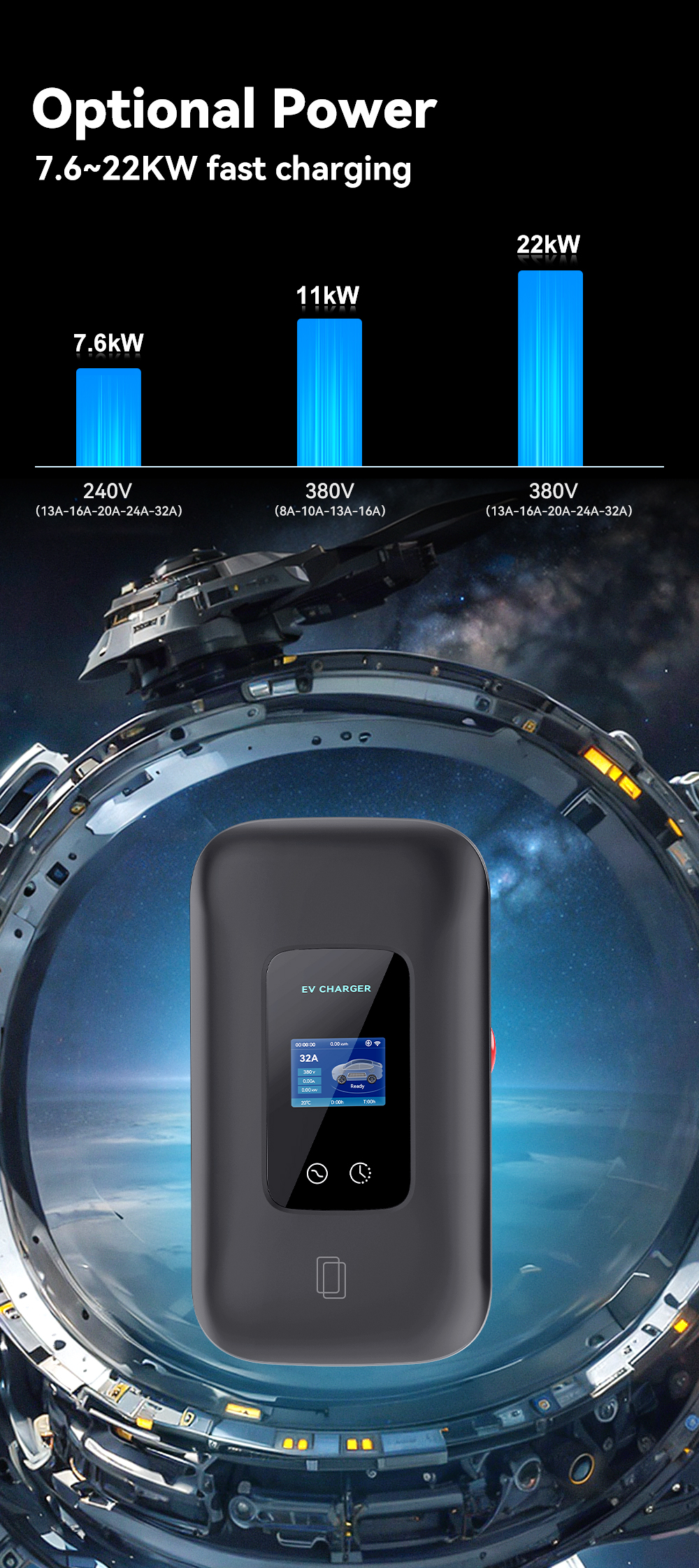
Standard Voltage Ranges for Portable Charger for Electric Car
Level 1 vs. Level 2: Why 120V and 240V Dominate the Portable Charger for Electric Car Market
Most portable electric vehicle chargers work with just two types of alternating current voltages: Level 1 at 120 volts and Level 2 ranging from 208 to 240 volts. Level 1 plugs into regular home outlets and gives about 1 to 1.8 kilowatts of power, which translates to around 3 to 5 extra miles every hour of charging. While this setup is great for quick charges when stuck somewhere or topping off during the night, most people find it too slow for everyday use. Level 2 needs a special 240 volt circuit but packs a bigger punch with 3 to 14.4 kilowatts, adding anywhere from 10 to 60 miles each hour. That's roughly six times quicker than Level 1 charging. No wonder 94 percent of public charging spots go with Level 2 according to a Ponemon Institute study from last year. And let's not forget the money factor either. Installing those fancy DC fast chargers costs an average of $740,000, so it's no surprise that most portable options stick with the basic 120/240 volt AC systems we already have.
Regulatory Foundations: How UL 2231, SAE J1772, and IEC 62196 Govern Input Voltage Safety and Compatibility
Three foundational standards ensure safety, interoperability, and voltage resilience across portable EV chargers:
- UL 2231 certifies personnel protection systems—including ground-fault and isolation monitoring—for equipment operating between 120V and 240V.
- SAE J1772, the North American standard, defines connector mechanics, communication protocols, and current-handling requirements up to 80A at 240V. Crucially, it mandates automatic voltage detection and amperage derating when a charger senses 120V input—preventing overload on standard circuits.
- IEC 62196 harmonizes plug designs globally (e.g., Type 1, Type 2), enabling cross-border compatibility without hardware changes.
Together, these standards require rigorous validation of overcurrent protection, thermal cutoffs, and fault-interruption timing—making dual-voltage operation not just possible, but reliably safe for over 90% of EVs on the market today.
Real-World Household Outlet Compatibility for Portable Charger for Electric Car
Dual-Voltage Design: How Modern Portable Charger for Electric Car Units Seamlessly Adapt to 120V and 240V Outlets
Modern portable chargers come equipped with smart circuitry that automatically senses incoming voltage levels in real time, switching effortlessly between 120V and 240V without needing any input from users. No more fiddling with settings since this tech handles everything behind the scenes. The result? About four miles of charge per hour when plugged into regular household outlets, but if someone can access a 240V connection such as those found in dryers or RV hookups, they get up to 25 miles per hour instead. These devices also have built in systems that adjust how much electricity they pull based on what the circuits can handle, which helps avoid issues like tripping breakers or causing overheating problems even in older homes with less robust electrical systems. Because of this flexibility, people find these units incredibly useful for all sorts of situations including long drives across country, living in apartments where installing something permanent isn't possible, or setting up temporary power solutions at homes during emergencies or renovations.
Safe Setup Guide: Matching NEMA Plug Types (5-15, 14-50, 6-50) to Your Portable Charger for Electric Car
Selecting the correct NEMA plug is essential for both performance and safety. Below are the most common configurations used with portable EV chargers:
| NEMA Plug Type | Voltage Rating | Use Case | Max Current | Safety Tips |
|---|---|---|---|---|
| 5-15 | 120V | Standard wall outlets | 15A | Avoid extension cords; inspect for wear, discoloration, or loose prongs |
| 14-50 | 240V | Dryer/RV hookups | 50A | Confirm proper grounding and neutral bonding; verify panel capacity before use |
| 6-50 | 240V | Workshops/industrial use | 50A | Requires dedicated 240V circuit—never share with other high-load appliances |
Always verify your outlet's label and physical configuration before connecting. Mismatched plugs risk arcing, insulation failure, or fire. For any 240V installation, consult a licensed electrician to assess breaker rating, wire gauge, and grounding integrity—especially in homes built before 2008.
Why DC Fast Charging Is Not Viable in a Portable Charger for Electric Car
The truth is, DC fast charging just doesn't work well with portable EV chargers, and it's not because nobody wants them. The real problem lies in what engineers call "engineering constraints" that simply can't be overcome right now. Let's start with the hardware needed to convert regular household electricity into the kind of high voltage DC power cars need (around 400 to 800 volts) at speeds above 50 kilowatts. This equipment alone tips the scales at over 100 kilograms, making it impossible to carry around anywhere. And then there's the heat issue. When systems run this hot, they need special cooling solutions. Liquid cooled cables might only add another 8 to 10 kg, but these come with their own problems like pumps, radiators, and all sorts of temperature monitoring gear. None of this stuff really works when trying to fit everything into something small enough to hold in one hand or pack into a suitcase.
The costs and infrastructure problems make things even worse. Putting in residential DC chargers usually costs more than $25,000 according to Forbes from last year. Why? Because they need those expensive 480V service upgrades, working with utilities, and modifying electrical panels. And it gets worse when we look at the homes themselves. The U.S. Department of Energy says something shocking: around 97% of American houses don't have the special circuits needed for DC fast charging. What about those so-called portable DC units with batteries? They just don't work in reality. To store enough power for about 100 miles drive, these devices would need lithium-ion cells weighing over 500 kilograms. That's way too heavy and dangerous for normal use. So what's left? Compact AC chargers that can handle different voltages are still the best bet for people who want to charge their electric vehicles on the go. They pass all the safety checks and actually work in most situations.
Frequently Asked Questions
What are the main differences between Level 1 and Level 2 charging?
Level 1 charging uses 120 volts and provides 1 to 1.8 kilowatts, adding 3 to 5 miles of range per hour. It's suitable for overnight charging or quick top-ups. Level 2 charging utilizes 240 volts and delivers 3 to 14.4 kilowatts, providing 10 to 60 miles of range per hour, making it six times faster than Level 1 charging.
Are portable EV chargers compatible with all household outlets?
Modern portable chargers are designed to automatically detect and switch between 120V and 240V outlets. They work with standard household outlets as well as 240V connections found in dryers or RV hookups, allowing for flexible charging options.
Why is DC fast charging not possible with portable EV chargers?
DC fast charging requires heavy equipment and special cooling solutions that are not feasible for portable designs. Additionally, most residential settings lack the necessary 480V infrastructure, making AC chargers a more practical and safe choice for portable use.