
 EN
EN
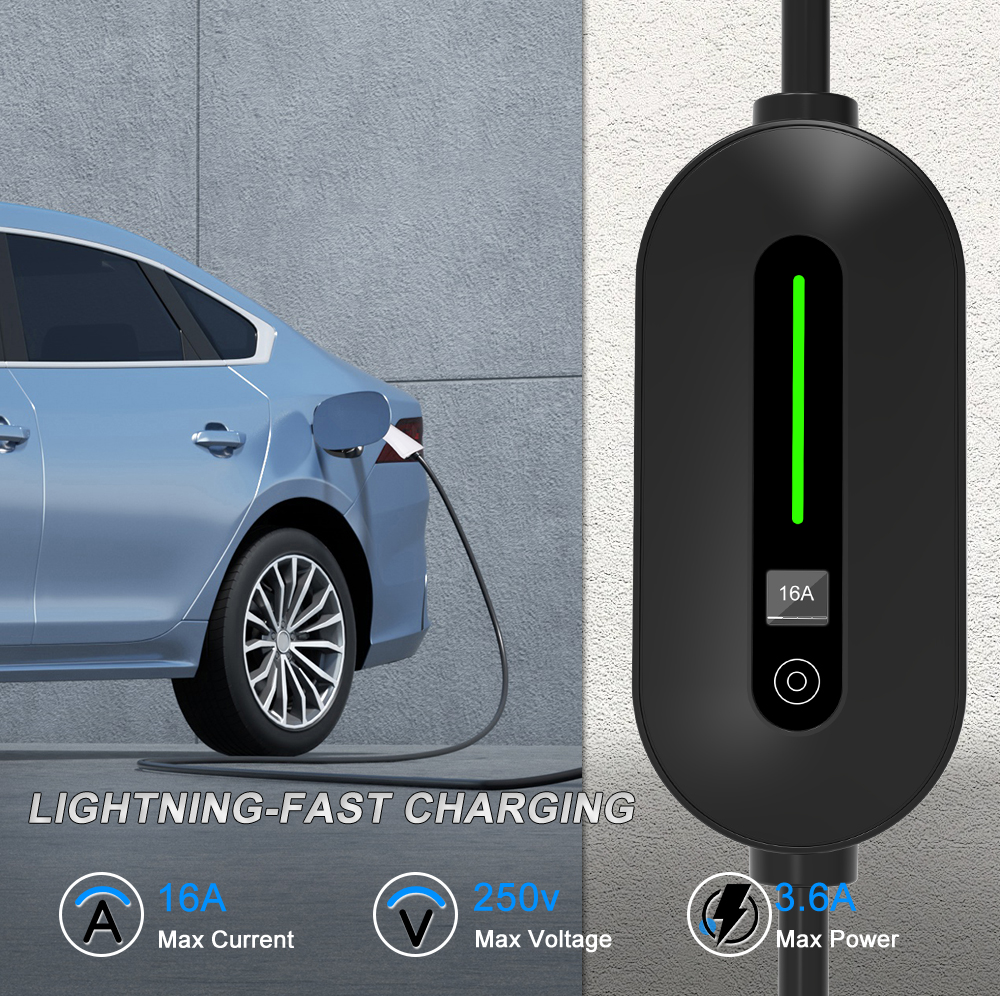
The Technical Ceiling: Why 7.7 kW Is the Maximum for EV Charger Single Phase
Physics and Standards: How Voltage — Current Defines Single-Phase Power Limits
The power delivered by single phase EV chargers basically works on the formula P equals V multiplied by I. Most homes have standard voltages somewhere between 230 and 240 volts AC. International safety rules like the IEC 62196-2 set limits on how much current can flow continuously through these systems, usually capping it at around 32 amps to keep things safe from overheating and damage to connectors. When we do the math, this gives us approximately 7.36 kilowatts at 230 volts times 32 amps, and about 7.68 kilowatts at 240 volts times the same current level. In real world situations though, most people just round these numbers up to roughly 7.7 kilowatts for simplicity. There are several factors that actually help maintain this upper limit:
- Grid voltage tolerances (±10% per regional specifications)
- Mandatory 20% derating for continuous loads under NEC and IEC guidelines
- Connector temperature limits during sustained operation
These aren’t arbitrary limits—they reflect decades of engineering consensus on safe, reliable, and interoperable residential charging.
Why 240 V — 32 A = 7.7 kW — The Practical Upper Bound for Residential EV Charger Single Phase
There are really two main reasons why 7.7 kW basically becomes the upper limit for what can be installed at homes. Most standard electrical panels in houses are built to handle 40 amp circuits, but according to NEC code 210.21(B)(1), they actually need to provide only 32 amps continuously after accounting for certain reductions. Then there's the matter of connector types. Both Type 1 and Type 2 plugs (which follow standards from SAE J1772 and IEC 62196-2) simply aren't designed to push beyond 32 amps when running on single phase power because their air cooling systems can't dissipate the extra heat generated. Going past these limits means bringing in stuff that doesn't fit with regular home setups like those fancy liquid cooled cables, expensive three phase wiring, or industrial strength circuit breakers none of which make financial sense for ordinary households. The latest NEMA report from 2023 backs this up showing that getting three phase service installed typically costs around $740 just for labor and permits. That's why 7.7 kW stands out as more than just a random figure. It represents the sweet spot where safety meets practicality and works well within what most residential electrical systems around the world can actually handle.
Standards and Connectors: How SAE J1772 and IEC 62196-2 Shape EV Charger Single Phase Performance
Type 1 vs. Type 2 in Single-Phase Mode: Compatibility, Ratings, and Regional Adoption
The SAE J1772 (Type 1) and IEC 62196-2 (Type 2) standards set out the physical specs and communication protocols for single phase EV charging. However, when looking at how these actually perform in practice, local electrical infrastructure tends to be the bigger limiting factor than the connector itself. Take Type 1, which is mostly used in North America and Japan. It has a 5 pin setup and on paper could handle up to 19.2 kW of power. But most homes only get around 7.7 kW max because of limitations from both the car's onboard charger and what the local grid can supply. Then there's Type 2, commonly found throughout Europe with its 7 pin design that works best with three phase power. Even when used for single phase charging though, it still faces the same voltage limits between 230 and 240 volts and hits the same 32 amp wall as Type 1. The bottom line here is that where each type gets used mainly depends on existing power grids rather than one being technically better than the other. North America and Japan stick with single phase largely due to older distribution systems already in place, whereas Europe went with Type 2 because they have more widespread access to three phase power across their networks.
Mode 2 (Portable) vs. Mode 3 (Fixed): Impact on Continuous Power Delivery for EV Charger Single Phase
Whether a home can reach those 7.7 kW charging speeds really comes down to if they're using Mode 2 or Mode 3 equipment. The portable plug-in versions work with regular 120-240 volt outlets and light duty cables, but this setup causes serious heat problems. Most people find their actual output falls somewhere between 20 to 40 percent lower after just half an hour of constant charging. On the other hand, hardwired fixed installations have special electrical circuits built specifically for this purpose. They come with built-in temperature sensors and heavy duty wiring that keeps things running close to maximum capacity. Looking at the IEC 61851 standards testing results shows these systems stay around 98 efficient when working at full power, which means they can consistently hit those 7.7 kW numbers in most cases. This difference in reliability is why Mode 3 setups charge vehicles 2 to 3 times quicker during the night hours, making them practically the only way homeowners can get the most out of their existing single phase electrical systems without major upgrades.
Real-World Constraints: Why Most EV Charger Single Phase Installations Deliver Less Than 7.7 kW
Derating Factors — Temperature, Cable Length, and Onboard Charger Limitations
Even with a certified 7.7 kW EVSE, real-world output routinely falls short—typically delivering 6.0–7.2 kW. Three primary derating factors drive this gap:
- Ambient temperature: Above 40°C (104°F), many EVSEs reduce current by 20–30% to protect internal electronics and connectors—a safeguard verified in UL 2594 and IEC 61851-1 thermal testing protocols.
- Cable length: Voltage drop accumulates at △3% per 15 meters of 6 AWG copper cable. A 30-meter run may cut effective power by 0.2–0.3 kW—enough to push some systems below 7.0 kW.
- Onboard charger limits: Over 60% of mass-market EVs—including base trims like the Nissan Leaf (6.6 kW max) and older Tesla Models—cap single-phase input well below 32 A. No EVSE can override this hardware constraint.
These variables mean “7.7 kW” is best understood as a system-level design target—not a guaranteed output—and underscore why professional site assessment is essential before installation.
Residential Context: Why EV Charger Single Phase Dominates Level 2 Home Charging
Most homes rely on single phase EV chargers for Level 2 charging since these fit right into what's already there. Standard household electrical service runs on 230 to 240 volts single phase power throughout much of North America, Europe, parts of Asia, and even Oceania. Three phase systems tell another story though. They need expensive panel upgrades, special circuit breakers, and sometimes even getting permission from local utilities before installation. Single phase models work just fine on regular 40 amp circuits that most houses have anyway. These chargers usually put out between 6 and 7.4 kilowatts, which means an average electric car battery (think around 60 to 80 kWh capacity) can charge completely overnight when electricity rates are lowest. According to recent stats from places like the International Energy Agency and US Department of Energy, this covers more than 95% of people's daily driving requirements. Plus, these units cost less upfront, don't involve complicated paperwork, and have shown themselves reliable over time. All these factors make them the sensible choice for most homeowners looking to switch to electric vehicles without breaking the bank or dealing with unnecessary complications.
FAQ
-
Why is 7.7 kW the upper limit for single phase EV chargers?
It’s the result of practical constraints in household electrical systems, such as voltage limits and current capacities, along with safety standards. -
Can single-phase chargers exceed 7.7 kW power delivery?
No, exceeding this limit would require additional components like liquid-cooled cables or three-phase setups, which are impractical for regular households. -
Why do most EV chargers deliver less than 7.7 kW in real-world scenarios?
Factors such as ambient temperature, cable length, and onboard charger limitations often reduce actual output. -
What are Mode 2 and Mode 3 charging setups?
Mode 2 refers to portable plug-in chargers, while Mode 3 involves fixed installations with dedicated electrical circuits, providing more reliable and higher charge rates. -
Why are single-phase chargers prevalent for home EV charging?
They integrate easily into existing household electrical systems without requiring expensive upgrades or installations.
Table of Contents
-
The Technical Ceiling: Why 7.7 kW Is the Maximum for EV Charger Single Phase
- Physics and Standards: How Voltage — Current Defines Single-Phase Power Limits
- Why 240 V — 32 A = 7.7 kW — The Practical Upper Bound for Residential EV Charger Single Phase
- Standards and Connectors: How SAE J1772 and IEC 62196-2 Shape EV Charger Single Phase Performance
- Real-World Constraints: Why Most EV Charger Single Phase Installations Deliver Less Than 7.7 kW
- Residential Context: Why EV Charger Single Phase Dominates Level 2 Home Charging
- FAQ