
 EN
EN
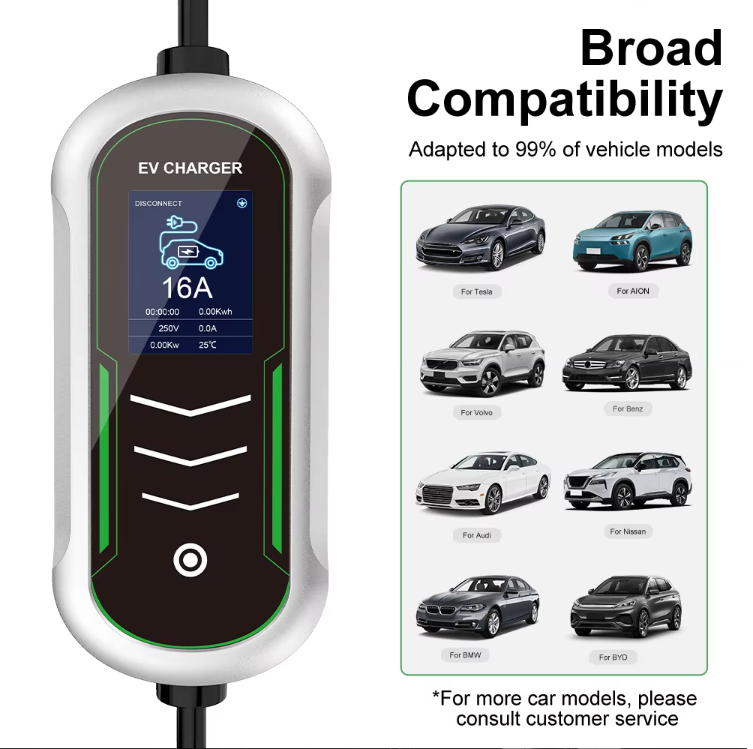
EV Charger Compatibility by Connector Standard and Region
The ability to charge electric vehicles depends heavily on what kind of plug works where, which has created quite a patchwork situation around the world. There are basically three main types of AC connectors out there right now. The J1772 or Type 1 connector is mostly used throughout North America, whereas most cars sold in Europe come with Type 2 connectors also known as Mennekes. When it comes to faster DC charging options, things get even more complicated. The Combined Charging System (CCS) takes existing AC connectors and adds extra pins for direct current power. Meanwhile Japan still relies largely on CHAdeMO technology for their vehicles. And interestingly enough, Tesla developed its own connector called NACS, which they made available to others, and we're seeing this system spread quickly throughout North America these days.
J1772 and Type 2: Dominant AC Standards for North America and Europe
The J1772 connector works for both Level 1 and Level 2 charging at speeds up to 19.2 kW, and pretty much every electric vehicle sold in North America outside the Tesla brand uses this standard. Over in Europe, things work differently with their Type 2 connectors which can handle three phase power reaching speeds of around 43.5 kW. More than 90% of electric cars there rely on this system. Unfortunately, these two standards don't play well together without special adapters. The main problems? Different pin arrangements inside the connectors, completely separate communication protocols between car and charger, plus variations in how electricity flows through the grid itself. That means drivers need those adapter devices if they want to charge at stations designed for the other standard.
CCS2, CHAdeMO, and NACS: DC Fast Charging Connectors and Their Vehicle-Specific Adoption
DC fast chargers rely on distinct, non-interchangeable connectors:
- CCS1/CCS2: Extends J1772 or Type 2 with integrated DC pins, delivering 50–350 kW. Adopted by most non-Tesla automakers globally.
- CHAdeMO: Delivers up to 100 kW and remains common among legacy Japanese EVs.
- NACS: Supports 250+ kW and is now formally standardized as SAE J3400; adopted by multiple automakers for future models starting in 2025.
| Connector | Max Power | Primary Region | Key Vehicles |
|---|---|---|---|
| CCS1 | 350 kW | North America | BMW, Ford |
| CCS2 | 350 kW | Europe | VW, Volvo |
| CHAdeMO | 100 kW | Japan | Nissan, Mitsubishi |
| NACS | 250+ kW | North America | Multi-brand |
GB/T in China and Regional Fragmentation: Why Global EVs May Lack Cross-Market Charging Access
The GB/T 20234 standard in China controls both AC and DC charging across the country, effectively cutting off compatibility with systems used in Europe and Japan. That means cars made for Western markets can't plug into Chinese stations without special adapters, same goes for vehicles brought into Europe or North America from China. This situation creates real headaches for car manufacturers who have to build different models for different regions. Travelers also face problems when visiting foreign countries, since their electric vehicles won't work properly at local charging points unless they carry those expensive adapters around.
Level 1 & Level 2 EV Chargers: Broad Compatibility Across BEVs and PHEVs
Most Level 1 and Level 2 electric vehicle chargers work pretty much everywhere for both battery electric cars and those hybrids that can plug in too. This broad compatibility exists because of established AC standards in different regions. Over in North America, almost all non-Tesla electric vehicles use the SAE J1772 or Type 1 plug. Even if someone owns a Tesla, they just need to pick up an adapter from any auto parts store to make it work. Things look similar in Europe where the Type 2 connector, also known as Mennekes, has become the go-to option for nearly every new electric car hitting the roads these days. Interestingly enough, even Tesla models imported into European markets come equipped with this standard connector already.
Level 1 chargers (120V) add 2–5 miles of range per hour—ideal for overnight home use. Level 2 units (240V) are significantly faster, delivering 10–60 miles hourly and meeting most daily driving needs. Unlike DC fast charging, these levels avoid regional incompatibility, making them reliable solutions for residential, workplace, and public installations.
| Charging Level | Voltage | Range Added/Hour | Primary Use Case |
|---|---|---|---|
| Level 1 | 120V | 2–5 miles | Overnight/home backup |
| Level 2 | 240V | 10–60 miles | Daily driving/public |
While rare exceptions exist, leading providers confirm that over 98% of BEVs and PHEVs support their region’s standard Level 1/2 connector—so verification via your vehicle’s manual or OEM portal remains prudent but rarely reveals incompatibility.
Tesla’s NACS Transition and EV Charger Interoperability
From Proprietary to Universal: How NACS Adoption Expands EV Charger Access for Non-Tesla Vehicles
When Tesla decided to move away from its own charging hardware to adopt the open North American Charging Standard (NACS), it was really a big deal for making EV charging work across different brands. Officially called SAE J3400, this standard creates compatibility between cars by setting rules for how chargers look physically, what kind of signals they send back and forth, and how much electricity gets delivered. Most car companies plan to start putting these NACS ports right into their vehicles around 2025, which means owners could plug directly into Tesla's Supercharger stations. These are pretty much the gold standard when it comes to fast charging in North America, so this change should make things much easier for electric vehicle drivers everywhere.
Right now, electric cars from other manufacturers can plug into Tesla superchargers using special adapters. But when native integration happens, it removes the need for those extra parts while also allowing for much faster charging speeds of around 1 megawatt in newer installations. The good news is that the North American Charging Standard actually uses similar wiring behind the scenes as the Combined Charging System standard already exists. That compatibility makes things easier technically speaking. What does this mean for regular drivers? They get instant access to more than 15 thousand reliable charging spots right away. Plus there's finally hope for a future where charging an EV becomes straightforward no matter which brand someone drives, although we might still see some regional differences depending on infrastructure rollout pace.
Practical Guidance for EV Owners: Matching Your Vehicle to Public and Home EV Chargers
Checking Connector Compatibility Using OEM Specs and Tools Like DOE AFDC
First things first, figure out what kind of connector comes standard on your electric vehicle. Most cars in North America use J1772, while European models typically go with Type 2. Fast chargers might have CCS1 or CCS2 ports, and there are still some older CHAdeMO stations around plus the newer NACS connectors too. Check the manual that came with the car or look up specs from the manufacturer if unsure. When looking at public charging spots, the Alternative Fuels Data Center run by the US Department of Energy is pretty handy. It lists something like 50 thousand locations across the country, complete with filters so we can see which ones have our specific connector type and whether they're actually available right now. Don't forget to compare how much power a station offers versus what the car can handle through its onboard charger though. Getting this wrong means slower charging times since mismatched power levels cut efficiency down anywhere between thirty to fifty percent, which nobody wants when trying to get back on the road quickly.
When Adapters Work — and When They Don’t: Limitations of EV Charger Bridging Solutions
Adapters enable limited bridging—such as NACS-to-J1772 for AC charging—but cannot resolve fundamental incompatibilities:
- DC protocol barriers: No functional CHAdeMO-to-CCS or GB/T-to-Type 2 adapters exist due to irreconcilable communication standards.
- Regional isolation: A GB/T adapter designed for Chinese infrastructure won’t operate safely on European or North American grids.
- Thermal and power mismatches: Using a low-power adapter on a high-output station risks overheating, connector failure, or reduced lifespan.
Adapters also void warranties if uncertified or misapplied. For home EV chargers, always match the connector and amperage rating to your vehicle’s onboard charger specifications—ensuring both safety and optimal performance.
FAQ Section
What are the main types of EV charging connectors worldwide?
The main types of EV charging connectors are J1772 (Type 1) used primarily in North America, Type 2 used in Europe, CCS1/CCS2 for DC fast charging globally, CHAdeMO mainly in Japan, and NACS which is spreading rapidly in North America.
Can I use an adapter for charging my electric vehicle in different regions?
Adapters can enable limited bridging between different connector types for AC charging, but they cannot resolve fundamental incompatibilities related to DC charging protocols or regional electrical standards.
What is Tesla's NACS and how does it affect EV charging?
Tesla's NACS (North American Charging Standard), now officially SAE J3400, promotes EV charger interoperability by allowing non-Tesla vehicles to use Tesla's Supercharging network without special adapters, starting around 2025.
How do Level 1 and Level 2 chargers differ?
Level 1 chargers operate at 120V, adding 2-5 miles of range per hour, ideal for home use, while Level 2 chargers use 240V, adding 10-60 miles per hour, suitable for daily driving and public use.
What should I check before using public EV chargers?
Before using public EV chargers, check the connector compatibility with your vehicle, the station's available power output, and compare it to what your car can handle through its onboard charger.