
 EN
EN
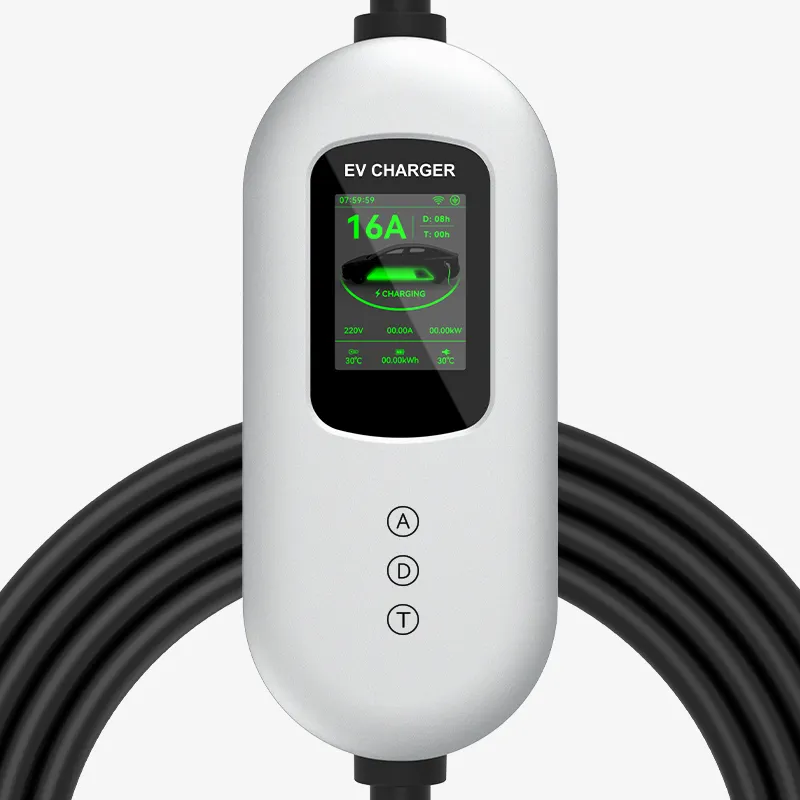
Core Safety Certifications for EV Chargers in North America
The Role of UL Certification for EV Chargers in North American Markets
UL certification stands as the gold standard for electric vehicle charger safety throughout North America. It means the product meets strict requirements for electrical safety and fire protection that most authorities look for when approving installations. Both home owners wanting to install charging stations and businesses setting up fleets need this certification to get insurance coverage and pass inspections. When a charger has that UL label, it's been put through rigorous testing to see how it handles real world problems like components getting too hot, unexpected shorts in the wiring, or failures in protective coatings. This kind of thorough evaluation gives peace of mind that these devices will work reliably whether they're installed in a garage during winter or out on a busy street where temperatures swing dramatically.
UL 2594: The Standard Testing Protocol for EVSE Safety and Durability
UL 2594 evaluates Electric Vehicle Supply Equipment (EVSE) across four critical areas:
- Electrical integrity: Assesses dielectric strength, leakage current, and abnormal circuit behavior
- Environmental endurance: Verifies performance in extreme temperatures (-22°F to 122°F) and high humidity
- Mechanical durability: Simulates over 10 years of plug insertion cycles and prolonged UV exposure
- Smart system reliability: Tests fault detection during ground faults, communication errors, or control signal loss
This comprehensive protocol ensures long-term operational safety and structural robustness under real-world stressors.
ETL Certification for EV Chargers as a Recognized Alternative to UL Listing
The ETL certification from Intertek basically gives the same green light as UL does, since they use exactly the same ANSI/UL testing procedures. Most major utility companies and retail chains across the country accept these certifications. Chargers that carry the ETL listing need to go through yearly factory checks to stay compliant. For companies trying to get their products onto store shelves faster, this alternative certification speeds things up without cutting corners on safety standards outlined in NEC 625. Many manufacturers have found this path works well when they want to enter new markets but don't want to wait months for traditional certifications.
UL 2231-1 / UL 2231-2: Ensuring Personal Protection in High-Voltage EV Charging Systems
These standards specifically address personnel and equipment safety in Level 3 DC fast charging systems (up to 1,000V). UL 2231-1 covers personal protection systems, while UL 2231-2 governs equipment grounding integrity. Key safeguards include:
- Continuous insulation resistance monitoring
- Automatic de-energization within 2 seconds of a detected fault
- Dual-layer insulation for live components
Certification bodies report a 94% reduction in electrical incidents when using UL 2231-compliant systems compared to non-certified units, underscoring their role in preventing shock hazards.
Global Compliance Standards for EV Charging Equipment
CE Marking and IEC 62196 Compliance for EV Chargers in the European Union
If companies want their electric vehicle chargers to work in European Union countries, they need those devices to have what's called a CE mark. This shows they meet requirements from two important regulations: the Low Voltage Directive and Electromagnetic Compatibility standards. Then there's the IEC 62196 standard which basically sets out what kinds of connectors can be used. Most importantly, Type 2 connectors dominate the scene right now, showing up at about 93% of public charging spots throughout Europe according to recent data from IEC. But getting everything just right isn't only about physical connections. Manufacturers also need to follow IEC 61851-1 guidelines covering how different systems talk to each other and manage heat during operation. These rules help keep things running safely while making sure cars from different manufacturers can charge properly whether using AC or DC power.
FCC Certification for EV Chargers: Managing Electromagnetic Interference (EMI)
The FCC's Part 15 and Part 18 rules govern how much electromagnetic noise EV chargers can emit across North America. For home installations, there's a cap on radio frequency interference at 30 dBμV/m measured three meters away. Commercial DC fast chargers have it tougher though, needing to stay under 46 dBμV/m when frequencies go past 1 GHz. When chargers don't meet these standards, they can mess up GPS systems and other wireless signals within about 15 meters. That's why manufacturers need to run proper EMI tests before bringing products to market. Nobody wants their car's navigation or smartphone connectivity ruined by poorly designed charging stations sitting right next door.
IEC 60730 and Functional Safety Requirements in Automated Charging Controls
Automated charging functions must meet IEC 60730 Class B requirements for functional safety, including:
- Overcurrent protection with response times under 100ms
- Ground fault detection at sensitivities of 30mA or lower
- Communication error recovery with automatic reboot within 2 seconds
This layered safety approach has been shown to reduce system failure rates by 72% compared to basic relay-based controls (Safety Engineering Journal 2023), enhancing reliability in unattended operations.
Navigating Regional Mandates: Eichrecht, MID, and Other International Certifications
Regional certifications add critical layers to global deployment strategies:
| Certification | Scope | Key Requirement |
|---|---|---|
| Eichrecht (Germany) | Commercial chargers | ±0.3% energy metering accuracy |
| MID (EU) | Public stations | Legal-for-trade billing compliance |
| NRCS (Saudi Arabia) | Desert installations | IP68 dust/water resistance |
A 2023 global standards study found that manufacturers allocate nearly 19% of R&D budgets to regional adaptation. The IEC 62196-3 extension now supports unified testing for extreme climates, validating operation from -40°C to +55°C.
Advanced Certifications for Bidirectional and Smart Charging Technologies
UL 9741: Safety Standard for EV Power Export Equipment With V2G Capability
The UL 9741 standard sets important safety requirements for those bidirectional chargers we see being used in vehicle-to-grid (V2G) systems. The standard really pushes for good performance across several key areas. For thermal management, components need to handle temperatures up to 105 degrees Celsius. When it comes to short circuits, the system has to interrupt within just 3 milliseconds. And maintaining stable voltage is crucial too, with a tolerance window of plus or minus 2%. Looking at some recent testing done by the Ponemon Institute back in 2023, chargers certified under UL 9741 showed about 99.9% effectiveness against surges. That kind of performance makes these chargers pretty much ready to roll out in our growing smart energy networks.
ISO 15118 Compliance: Enabling Plug & Charge and Secure Bi-Directional Interoperability
ISO 15118 integrates three foundational capabilities for intelligent charging:
| Feature | Technical Requirement | Impact |
|---|---|---|
| Plug & Charge Authentication | X.509 digital certificate exchange | Eliminates need for RFID cards or apps |
| Encrypted Communication | TLS 1.3 with 256-bit AES-GCM | Prevents man-in-the-middle attacks |
| Smart Grid Signaling | IEC 61850-7-420 compatibility | Enables 15-second demand response cycles |
According to a 2024 CharIN study, ISO 15118-compliant systems reduce authorization failures by 87% compared to older OCPP 1.6 implementations.
How ISO 15118 Supports Smart Grid Integration and Encrypted Communication
By incorporating DIN SPEC 70121 extensions, ISO 15118 enables dynamic interaction between EVs and the grid, allowing chargers to:
- Adjust charging power based on real-time grid frequency (e.g., throttling to 22kW at 50.2Hz)
- Verify renewable energy usage via I-REC Standard v1.4 for carbon-aware charging
- Achieve sub-50ms latency in V2G power reversal scenarios
These features enabled Southern California Edison (SCE) to defer $740,000 in infrastructure upgrades during peak demand events in 2023 by leveraging smart charging signals.
Interoperability and Communication Standards for Seamless EV Charging
OCPP (Open Charge Point Protocol) Certification for Reliable Backend Connectivity
Getting OCPP certified means electric vehicle chargers can talk to about 94% of all charging stations around the world, as Navigant Research found back in 2023. The beauty of OCPP lies in it being an open standard, which basically lets these chargers plug into any central management system without headaches. This connection makes things like checking for problems remotely, updating software, and managing how much power goes where across multiple stations possible. Operators who upgraded to OCPP version 2.0.1 saw their downtime drop by roughly 37%, mainly because they could spot issues faster and fix them before customers even noticed anything was wrong, according to last year's Global Charging Regulations Report from industry analysts.
EV Charging Standards: SAE J1772, CCS, NACS, Type 1, and Type 2 Compatibility
Physical connector standardization ensures broad vehicle compatibility:
| Standard | Region | Voltage Support | Key Manufacturers |
|---|---|---|---|
| SAE J1772 | North America | 120V–240V AC | 80% of US OEMs |
| CCS1 | North America | 200–920V DC | Major automakers |
| Type 2 | European Union | 230V AC/920V DC | 92% of EU networks |
A 2023 Grid Integration Study found that public stations offering both CCS and NACS connectors achieve 68% higher utilization than single-standard units. Emerging dual-port designs now support simultaneous AC and DC charging without adapters, improving convenience and throughput.
National and State-Specific Certification Programs for Commercial Deployment
California Type Evaluation Program (CTEP) and Its Influence on Market Access
California's Type Evaluation Program (CTEP) has pretty tough rules about how accurate commercial EV chargers need to be when they're charging customers money. The law says devices have to stay within plus or minus half a percent when measuring energy usage if they want to work in public spaces. This isn't just some paperwork thing either it's actually required to get into those utility company incentive programs too. Looking at numbers from 2023, around 94 out of every 100 electric vehicle charging projects across California need CTEP clearance before moving forward. So companies that don't meet these standards basically can't even play in what's turning into a massive $2.8 billion industry right now.
NTIP Certification for Revenue-Grade Metering and Utility Billing Accuracy
The NTIP certification means EV chargers have met the ANSI C12.20 standards when it comes to revenue grade metering, which basically ensures they measure energy with about plus or minus 0.2% accuracy. Getting this kind of precise measurement matters because it connects properly with utility company billing systems and those demand response programs. Most US utilities these days require NTIP certified equipment if companies want to take part in grid services. Around three out of four utilities actually insist on this certification before allowing anyone onto their networks, mainly to keep track of money flows accurately and maintain reliable data records across the board.
NEC Article 625: Safety Framework for EV Charging System Installations
Article 625 of the National Electrical Code sets important safety standards when installing electric vehicle chargers. The code requires ground fault protection that limits leakage current to just 30 milliamps, plus circuits need to be sized with extra capacity to avoid overheating issues. When installers follow these guidelines properly, it makes a big difference in how well the systems work long term. According to data from the National Fire Protection Association, sticking to these rules cuts down on field problems by around two thirds compared to non-compliant installations. Most states across America have adopted this standard into their building codes now, covering about 42 states total. These regulations form the basis for getting permits approved, passing inspections, and securing proper insurance coverage for EV charging stations.
FAQ
What is UL certification and why is it important for EV chargers?
UL certification ensures that EV chargers meet strict safety requirements for electrical safety and fire protection, which are crucial for installations and obtaining insurance coverage. It involves rigorous testing to evaluate the charger's performance under real-world conditions like overheating, wiring shorts, and protective coating failures.
How does ETL certification compare to UL certification for EV chargers?
ETL certification is a similar safety certification using the same ANSI/UL testing procedures as UL. It is accepted by major utility companies and facilitates faster market access while maintaining required safety standards.
Why is ISO 15118 compliance significant in EV charging?
ISO 15118 compliance integrates intelligent charging capabilities like Plug & Charge authentication, encrypted communication, and smart grid signaling, enhancing security and interoperability between vehicles and charging stations.
What standards apply to connectors in EV charging systems?
Standards like SAE J1772, CCS, Type 1, and Type 2 ensure broad vehicle compatibility and cover both AC and DC charging requirements for different regions.
Table of Contents
-
Core Safety Certifications for EV Chargers in North America
- The Role of UL Certification for EV Chargers in North American Markets
- UL 2594: The Standard Testing Protocol for EVSE Safety and Durability
- ETL Certification for EV Chargers as a Recognized Alternative to UL Listing
- UL 2231-1 / UL 2231-2: Ensuring Personal Protection in High-Voltage EV Charging Systems
-
Global Compliance Standards for EV Charging Equipment
- CE Marking and IEC 62196 Compliance for EV Chargers in the European Union
- FCC Certification for EV Chargers: Managing Electromagnetic Interference (EMI)
- IEC 60730 and Functional Safety Requirements in Automated Charging Controls
- Navigating Regional Mandates: Eichrecht, MID, and Other International Certifications
- Advanced Certifications for Bidirectional and Smart Charging Technologies
- Interoperability and Communication Standards for Seamless EV Charging
- National and State-Specific Certification Programs for Commercial Deployment
- FAQ