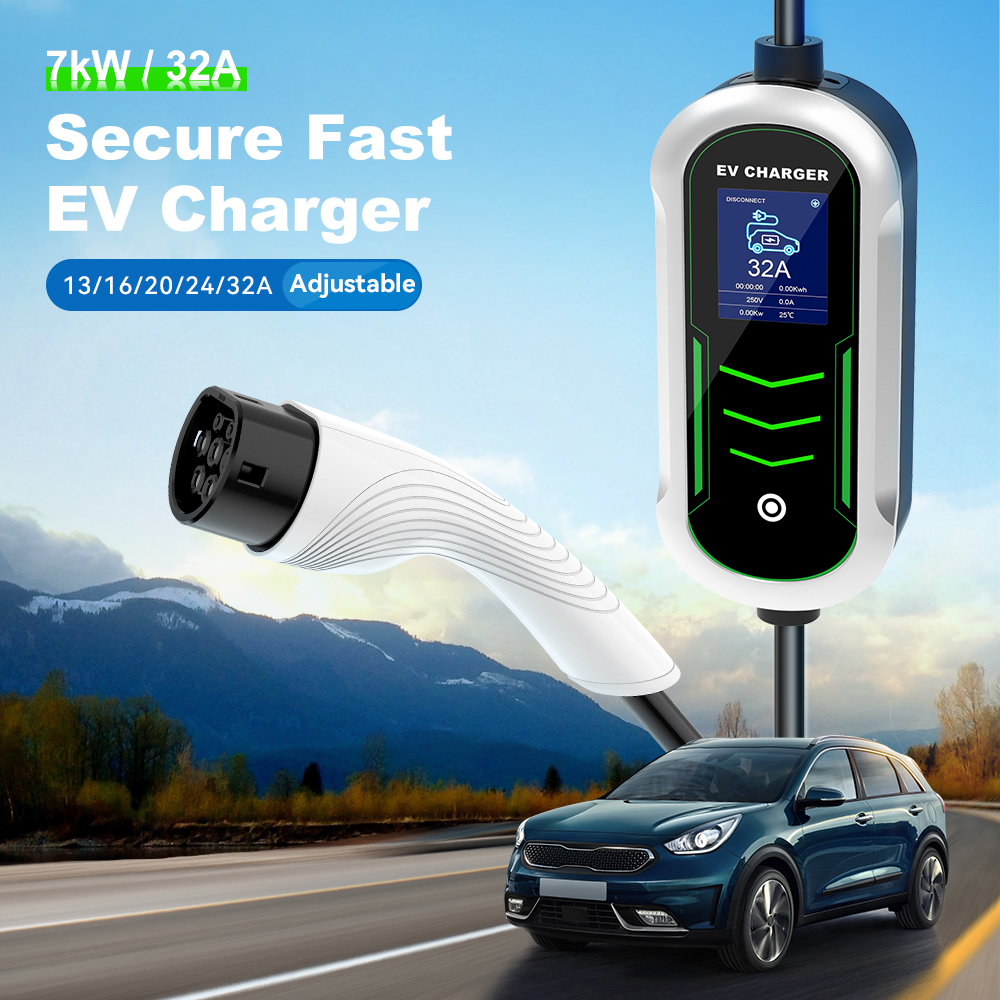
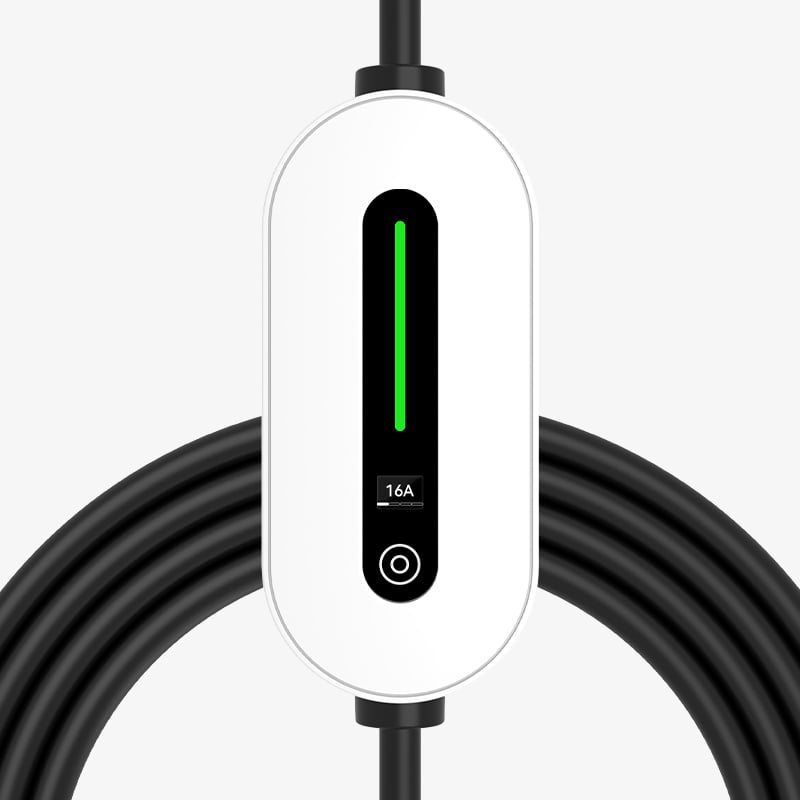
Safeguarding against electrical overloads is paramount in high-power EV charging. The 7kW 32A EV charger employs redundant, standards-compliant protective mechanisms to prevent catastrophic failures during operation.
Circuit breakers and fuses act as our primary safeguard against too much current running through electrical systems. They cut off power almost instantly once certain limits get crossed. Thermal magnetic breakers work two ways actually. The magnetic part kicks in really fast for those sudden short circuits where current jumps to at least three times what it should be. Meanwhile the thermal aspect takes longer but handles situations where there's just too much current flowing continuously. When dealing with something like a 32 amp charger, most experts recommend going with 40 amp circuits instead. This follows guidelines from IEC 60364-5-52 which basically says we should leave some breathing room for normal fluctuations. If these protections aren't in place though, wires can overheat pretty quickly. Insulation starts breaking down after only a few minutes of excess current, which leads to serious problems down the road.
Following IEC 61851 standards means getting those safety responses just right across the board. What the standard actually does is set specific trip points at around 110 to 125 percent of normal current levels. Take a 32 amp charger as an example case study here. The circuit breakers need to kick in before reaching 41 amps when there's constant power draw, all within certain time limits. This protection works for both the charging equipment itself and those delicate electric vehicle battery management systems that can get damaged easily. Most manufacturers these days have started using what they call dual stage current monitoring. This helps tell apart brief spikes in power demand, like when cars are exchanging information during startup, from real problems where too much electricity keeps flowing through the system for extended periods.
| Protection Parameter | IEC 61851 Requirement | Purpose |
|---|---|---|
| Overload Response | 125% rated current | Prevent conductor degradation |
| Short-Circuit Trip | 5ms at ≥300% current | Eliminate arc flash risks |
| Continuous Tolerance | +5% current stability | Ensure safe 7kW sustained delivery |
Mode 3 charging requires continuous 32A power flow through EV charging equipment over long periods, which goes way beyond what most home electrical systems are built to handle. Accurate current measurement around ±0.5% is essential here, usually achieved with Hall-effect sensors that let operators monitor conditions in real time while blocking out those pesky grid fluctuations. If this precision isn't there, something as small as a 2A overcurrent lasting just half an hour could raise cable temps by nearly 40 degrees Celsius according to UK Electrical Safety First standards, potentially melting insulation layers. Getting these measurements right makes all the difference for maintaining steady 7kW output without putting safety at risk or shortening equipment lifespan down the road.
NTC thermistors, which stand for Negative Temperature Coefficient, keep an eye on internal temps especially around those power electronics modules and connectors where heat tends to build up. The system watches closely when parts start getting too warm, usually above about 85 degrees Celsius. At that point, the sensors kick in and shut down the charging process right away. This is different from just having one sensor somewhere because multiple points across the system catch hot spots before they become problems. Manufacturers test all these safety features according to standards set by IEC 62955 for thermal runaway scenarios, making sure everything works properly under real world conditions.
According to standard EN 61851-1 Annex D, most modern chargers will cut their output down to around 28 amps once the surrounding temperature goes above 35 degrees Celsius. That represents roughly a 12.5% reduction which keeps things running safely inside the device. The reason behind this built-in adjustment? Well, it actually helps combat the buildup of heat over time. What does that mean practically? Longer lasting equipment! Some studies suggest products can last about 30% longer with this feature active. Plus, it stops the insulation materials from breaking down prematurely. Today's charging stations handle all these calculations on the fly through special software and control mechanisms developed specifically for thermal management purposes.
For shock prevention in those 7kW 32A electric vehicle chargers, Residual Current Devices or RCDs play a critical role. Standard Type A models catch regular AC leakage currents, but when it comes to EVs, we need something better. That's where Type B RCDs come into play since they can spot those tricky pulsating DC faults that happen inside EV power converters. The IEC 61851 standard actually requires this feature because if DC leakage goes unnoticed beyond 6 milliamps, there's serious risk of electrocution. Most newer 7kW chargers now come with built-in Type B protection as standard equipment. This means no extra safety layers needed anymore, and users get continuous protection throughout their full hour of 32A charging without worrying about gaps in safety coverage.
Checking the grounding system regularly stops dangerous electricity buildup in equipment casings. Modern earth continuity monitoring devices measure wire resistance hundreds of times every second based on micro-ohmmeter technology. These systems will automatically shut down operations if resistance goes over 0.3 ohms according to EN 50620 standards. Better models can spot insulation problems before they get bad, detecting drops under 1 megaohm with responses faster than one millisecond. This matters a lot for setups running at 32 amps where power levels reach 7 kilowatts nonstop. Smart software constantly compares voltage changes outside normal ranges (+/- 10%) with known leakage patterns. This helps avoid false alarms while still protecting against even small arc faults down to just 5 milliamps of current.
The microprocessor systems inside today's 7kW 32A chargers keep checking current and voltage levels all the time, sampling them 1,000 times per second through those Hall effect sensors we've been talking about. When something goes off track - like when there's a sudden spike above or below 5% of the 32A rating, or if voltages dip under 207 volts in standard 230V setups - these smart systems catch it and react within just 100 milliseconds. That kind of quick thinking beats out old school mechanical relays hands down, stopping those dangerous chain reactions before they start. Real world tests back this up too; according to the IEC reports from last year, fast acting designs cut down on electrical fires by almost 94%. And it gets better because pattern recognition tech lets these chargers spot problems even earlier, catching those telltale signs of arcing and grounding issues long before they become serious safety hazards.
| Monitoring Parameter | Detection Threshold | Response Action |
|---|---|---|
| Current Fluctuation | ±5% of 32A rating | Current limiting |
| Voltage Variation | ±10% of nominal | Charging pause |
| Arc Signatures | 8mA RMS | Instant shutdown |
The charging process stops on its own whenever important limits get crossed. When insulation resistance drops under 1 megaohm, this usually means there's water getting in somewhere or parts are starting to wear out which can lead to dangerous shocks. If voltages swing too far from normal levels, like going above 253 volts or dropping below 207 volts, the system shuts down completely to keep both the charger and car's electronic systems safe. These two main ways of detecting problems follow industry standards set by IEC 62196, and real world tests in 2024 showed they prevented hazards around 96 percent of the time. Every time someone starts charging, special tests check how well the grounding works by sending through tiny voltage signals under 12 volts. The system keeps checking resistance all the time while running, and will cut power right away if anything looks unsafe. Special circuitry checks voltage levels every 20 milliseconds to stop things from overheating when voltages spike unexpectedly.
The international standards world has set rules about electrical safety, specifically looking at things like IEC 60364-5-52 from 2019 and BS 7671:2018. These guidelines basically say that when dealing with continuous loads, we need to stick to an 80% derating rule. That means if someone wants to install a 32A electric vehicle charger, they actually need a 40A circuit dedicated just for it. When engineers run thermal models on this stuff, what they find is pretty telling. If 6mm squared copper cables are pushed to their full 32A capacity without leaving that extra room, temperatures can jump by more than 15 degrees Celsius. Over time, this heat buildup really takes a toll on cable insulation. Before any retrofit work gets done, electricians should always check what space remains available in the main distribution panel. Skipping this step could lead to all sorts of problems down the road including frequent circuit breaker trips, gradual damage to wiring conductors, and worst of all, failing those mandatory compliance checks during inspections.
According to EN 50620:2017 standards, equipment must include residual current monitors (RCMs) capable of detecting changes as small as plus or minus 30 milliamps. The standard also mandates real time voltage stability systems that keep power output stable within ten percent of normal levels while charging processes are underway. For advanced applications, residual current breakers equipped with overcurrent protection (RCBOs) can spot developing leakage paths even when they evolve at rates slower than three milliamps per second. When insulation resistance drops below one megaohm, monitoring systems kick in and shut down operations within just over a hundred milliseconds. These combined safety features help prevent dangerous situations like electric shocks and potential fires during power fluctuations across the grid. What makes this approach particularly smart is how it avoids repeating functions already built into Type B residual current devices and separate thermal monitoring setups, creating a more efficient overall system design.
Key compliance requirements:
| Safety Feature | Threshold | Response Time |
|---|---|---|
| Voltage Stability | ±10% fluctuation | <200ms |
| Insulation Resistance | <1 MΩ | <100ms |
| Earth Leakage Detection | 30 mA imbalance | <300ms |
A 40A circuit is recommended for a 32A charger to provide a buffer for normal current fluctuations and prevent overheating.
Type B RCDs can detect pulsating DC leakage which standard Type A RCDs cannot, offering enhanced protection against electrocution risks in EV charging applications.
Charging outputs are reduced when ambient temperatures rise above 35°C according to EN 61851-1 Annex D, which helps prevent overheating and prolongs equipment life.
Automatic shutdown occurs when critical limits, such as insulation resistance dropping below 1 megaohm or significant voltage fluctuations, are detected, ensuring safety for both the vehicle and charger.

 EN
EN