
 EN
EN
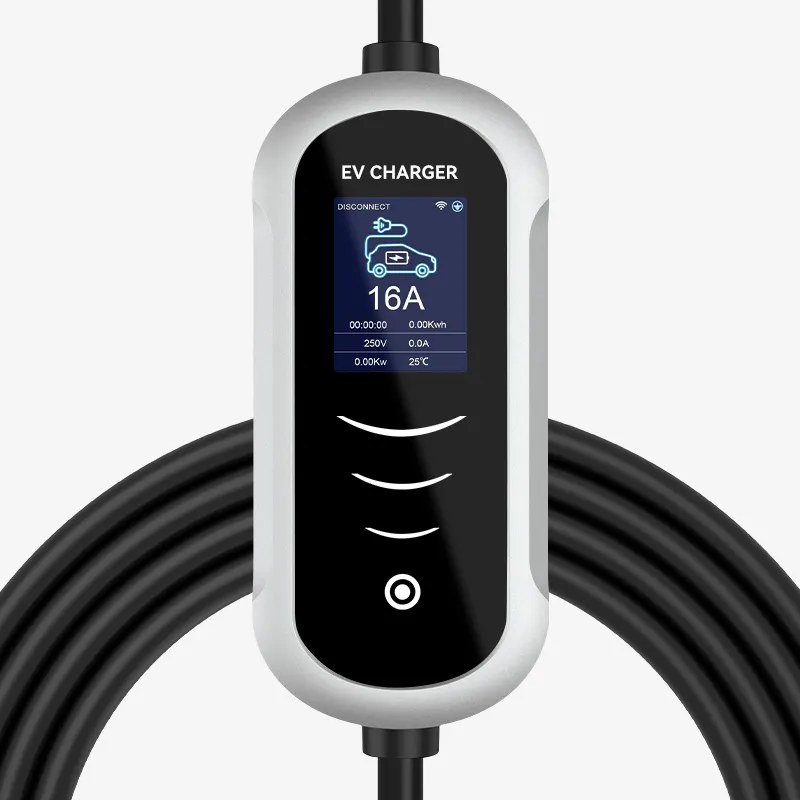
How Power Output (3kW vs. 5kW) Determines Real-World EV Charging Time
The Physics of kW: Why Higher Power Reduces Charge Duration–But Not Linearly
Charging time depends on power transfer rate–measured in kilowatts (kW). A 5kW charger delivers 67% more energy per hour than a 3kW unit. For a 60kWh battery, theoretical times are:
- 3kW: 20 hours (60 ÷ 3)
- 5kW: 12 hours (60 ÷ 5)
The nice straight line we see on paper starts to get wavy when we factor in conversion losses. When cars convert AC power to DC, they usually lose around 10 to 15% efficiency right there. And then there's the heat problem in those charging cables too. The resistance gets worse as current goes up. So what happens? A 3kW charger might actually give us about 2.55kW after losses, but bump it up to 5kW and suddenly we're looking at closer to 4.25kW real-world performance. That means those neat calculations showing a 67% faster charge time don't quite hold up when we plug everything in. Most people find their actual savings sit somewhere around half that number instead.
Accounting for Efficiency Losses: Why 5kW ≠ 67% Faster Charging in Practice
Real-world benefits get cut down quite a bit because of specific vehicle limitations. A lot of regular electric cars come with single-phase onboard chargers that top out around 3.7 to 4.6 kW. So even if someone installs a bigger 5 kW charger, it still can't push past those built-in limits. Take for instance when an EV's onboard charger is maxed at 4.6 kW. Going from a 3 kW setup gives only about 1.6 kW extra power, which translates to roughly 53% faster charging instead of the full 2 kW improvement people might expect. Then there's the issue with heat too. When temperatures climb above 95 degrees Fahrenheit, most battery management systems start cutting back on power output by as much as 20%. This means what was originally a nice 50% time savings over 3 kW drops down to somewhere between 40 and 50% depending on conditions.
Nissan Leaf (40kWh): 13.3h (3kW) vs. 8.0h (5kW) to 80%–With Onboard Charger Constraints
Take compact electric vehicles such as the 40kWh Nissan Leaf for example. Charging it from almost empty all the way up to 80% capacity takes around 13 hours and 20 minutes when using a standard 3kW charger. With a better 5kW unit, this drops down to just over 8 hours, which theoretically represents nearly a 40% improvement. But here's where things get tricky. Most Leaf models can only handle charging speeds up to 3.7kW maximum, so even if someone installs a 5kW charger at home, those additional 1.3kW simply go to waste. What does this mean in practice? Real-world charging times end up being somewhere between 20 and 30% slower than what manufacturers promise under perfect conditions.
Tesla Model 3 RWD (60kWh) & VW ID.4 (77kWh): When Derating Cuts the 5kW Advantage
Bigger battery electric vehicles actually get less benefit from those fancy high power AC chargers than one might expect. When temperatures climb above 30 degrees Celsius or so, the system starts cutting back on how much power it can take in. Take a typical 5kW charging session for instance it might only deliver around 4.3kW when it gets hot outside. Both the smaller 3kW and bigger 5kW chargers experience pretty much the same kind of slowdown, which means the time savings we thought we'd get from upgrading just aren't there anymore. Things get even worse once the battery reaches about 80% charge level. No matter what charger someone is using, the charging rate drops off rapidly at this point. Drivers often find themselves waiting an extra couple hours to finish charging their cars, even though they've invested in that more powerful equipment.
Where 3kW and 5kW EV Chargers Fit in the Level 2 AC Charging Landscape
Level 2 AC charging covers a wide range from around 3 to 22 kilowatts worldwide, and this varies quite a bit depending on where you are. In North America, most systems can handle up to about 19.2 kW at 80 amps, whereas European countries often go for the full 22 kW using their three-phase power setup. The lower end of this spectrum includes those 3 kW and 5 kW units that many homeowners install. These basic residential options give roughly 10 to 20 extra miles every hour of charging, which is way better than the slow Level 1 chargers that only manage 3 to 5 miles per hour. Plus they don't require expensive electrical panel upgrades. A lot of older houses with 100 to 200 amp service panels simply can't handle anything above 30 amps, so these smaller Level 2 units work great there. They're also really important for apartment complexes, townhouses, and businesses looking to keep costs down when setting up charging stations. No wonder Level 2 makes up almost half of all electric vehicle charging points around the world. It just works well enough without being too complicated or expensive.
Critical Non-Power Factors That Override the 3kW vs. 5kW EV Charger Difference
While charger power ratings matter, three non-power factors frequently neutralize the difference between 3kW and 5kW units–often making them functionally identical in daily use.
Onboard Charger Limit: Why Most EVs Cap at 3.7–4.6kW on Single-Phase AC
The onboard charger, which converts AC power to DC inside the car, basically controls everything when it comes to charging speed. Most budget electric cars come with single phase OBCs that handle around 16 to 20 amps at 230 volts, which puts a cap on their maximum power intake somewhere between 3.7 and 4.6 kilowatts. Take a look at models like the MG ZS EV or entry-level VW ID.3 even if someone installs a 5kW wallbox, these cars still won't pull more than about 3.7kW from the grid. The Nissan Leaf stands out here with its 6.6kW onboard system, and certain Tesla models manage to make good use of higher capacity AC connections too. So what happens when someone spends extra money on a 5kW charger but owns a car limited to 3.7kW? Well, they end up getting exactly the same charging experience as someone who bought a cheaper 3kW unit for their garage.
| OBC Capacity | Compatible Chargers | Effective Output |
|---|---|---|
| ≤ 3.7kW OBC | 3kW or 5kW units | ≤ 3.7kW |
| 4.6–6.6kW OBC | 5kW units | 4.6–5kW |
Grid Voltage, Ambient Temperature, and State of Charge–How They Reduce Effective kW Delivery
Four environmental variables degrade both 3kW and 5kW performance equally:
- Voltage sags (e.g., <230V) reduce power proportionally–P = VI–so a 5% drop cuts 5kW output by 250W.
- Temperatures above 35°C trigger BMS derating, curtailing current by 10–25% to protect battery health.
- Sub-10°C conditions raise internal battery resistance, diverting up to 30% of input energy into heat rather than stored charge.
- Charging above 80% SOC progressively throttles rates–sometimes halving them–regardless of charger capability.
These dynamics explain why real-world tests–like charging a cold Volkswagen ID.4 to 90%–often show less than a 15% speed difference between 3kW and 5kW hardware, despite the theoretical 67% power gap. SAE J1772 standards underpin these behavioral limits, reflecting decades of automotive engineering consensus on safe, sustainable AC charging.
When Upgrading to a 5kW EV Charger Makes Sense–And When a 3kW Charger Is Sufficient
Use-Case Analysis: Overnight Home Charging, Shared Residential Circuits, and Multi-EV Households
For single-vehicle households with predictable routines, 3kW chargers reliably replenish typical daily usage (100–150 km) overnight in 8–10 hours–ideal for garages with limited electrical capacity and no need for panel upgrades.
The amount of electricity used matters quite a bit here. A basic 3kW charger pulls around 12.5 amps at 240 volts, whereas a faster 5kW model needs about 21 amps. For homes with smaller 100 amp electrical panels, or where circuits are already handling big loads like air conditioning systems, electric ranges, or other power-hungry appliances, installing a 5kW charger can cause problems. Breakers might trip regularly, and some utilities even charge extra fees for excessive demand. When multiple EVs need charging at once, two 5kW units typically need their own dedicated 50 amp circuit. But most standard home electrical setups only handle 30 amps, so switching back and forth between vehicles using 3kW chargers works better for typical residential wiring. While upgrading to 5kW does cut charging time in half for a single car, it usually doesn't make financial sense unless the house already has the right electrical setup. After all, most people can rely on public fast charging stations whenever they need to travel longer distances.
FAQ
What factors determine real-world EV charging time differences between 3kW and 5kW chargers?
The charging time difference between 3kW and 5kW chargers is affected by conversion losses, vehicle limitations, onboard charger constraints, ambient temperatures, grid voltage, and the state of charge of the EV battery.
Can all EVs take advantage of a 5kW charger?
Not all EVs can take full advantage of a 5kW charger. Most electric vehicles have onboard chargers with power intake limits, typically capping at 3.7 to 4.6kW on single-phase AC. This means installing a 5kW charger might not result in faster charging.
Why might a 3kW charger be sufficient for home use?
For single-vehicle households with steady driving patterns, a 3kW charger usually replenishes daily driving range overnight without the need for electrical panel upgrades, making it economically feasible for home setups.
What are the non-power factors limiting charging speeds?
Non-power factors that limit charging speeds include grid voltage fluctuations, temperature effects on the battery management system, internal battery resistance in cold conditions, and reduced charging efficiency above an 80% state of charge.
Table of Contents
-
How Power Output (3kW vs. 5kW) Determines Real-World EV Charging Time
- The Physics of kW: Why Higher Power Reduces Charge Duration–But Not Linearly
- Accounting for Efficiency Losses: Why 5kW ≠ 67% Faster Charging in Practice
- Nissan Leaf (40kWh): 13.3h (3kW) vs. 8.0h (5kW) to 80%–With Onboard Charger Constraints
- Tesla Model 3 RWD (60kWh) & VW ID.4 (77kWh): When Derating Cuts the 5kW Advantage
- Where 3kW and 5kW EV Chargers Fit in the Level 2 AC Charging Landscape
- Critical Non-Power Factors That Override the 3kW vs. 5kW EV Charger Difference
- When Upgrading to a 5kW EV Charger Makes Sense–And When a 3kW Charger Is Sufficient
- FAQ