
 EN
EN
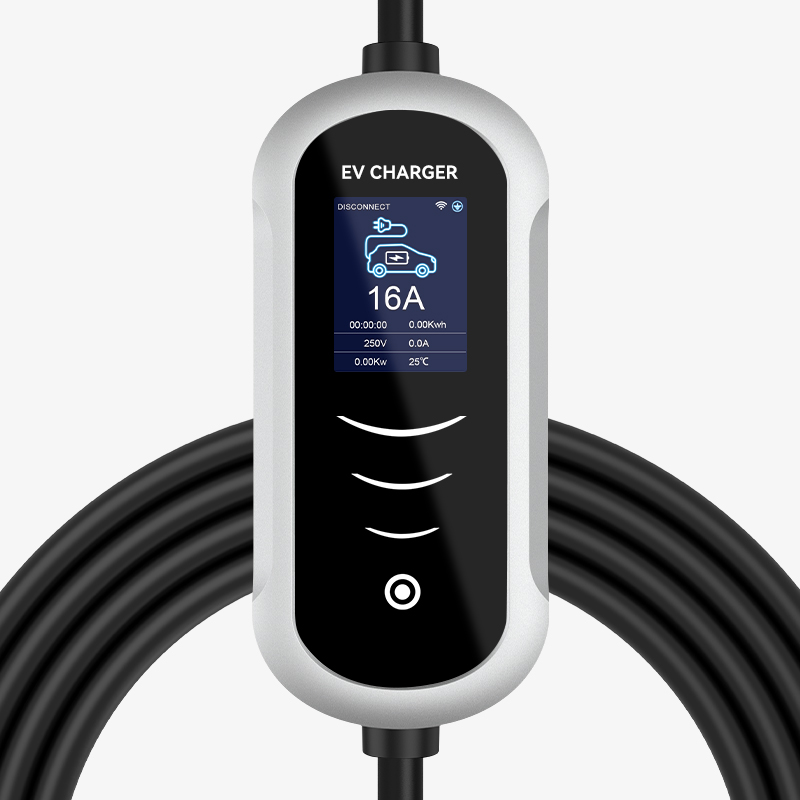
Smart Connectivity and App Integration
Remote Monitoring, Scheduling, and Charging History via EV Apps
Modern electric vehicle owners expect more than basic power delivery from a portable EV charger — they need intelligent, on-demand control. A well-designed companion app transforms the charging experience by putting real-time oversight and management directly in the driver’s pocket. Users can monitor live charging status, start or stop sessions remotely, and review detailed energy consumption patterns over time. Built-in scheduling lets drivers align charging with off-peak electricity rates automatically, while historical logs track session duration, total kWh delivered, and estimated cost per charge. This data empowers owners to refine habits, forecast daily range more accurately, and reduce long-term energy expenses. Leading apps also integrate battery health analytics and maintenance reminders — all within a clean, intuitive interface that reinforces trust and simplifies daily EV ownership.
Over-the-Air Updates and Real-Time Diagnostic Alerts
True smart connectivity extends beyond monitoring: over-the-air (OTA) firmware updates keep portable chargers current with evolving EV models, grid standards, and safety protocols — without requiring service visits. These automatic upgrades deliver performance enhancements, new features, and critical bug fixes, ensuring long-term compatibility and reliability. Complementing this are real-time diagnostic alerts: if the unit detects abnormal voltage, overheating, or connection faults, it immediately notifies the user’s smartphone. Predictive diagnostics can even flag early signs of component stress or battery degradation. Together, OTA capability and proactive alerts minimize downtime, extend hardware lifespan, and support confident, unsupervised use — whether at home, on a road trip, or at a remote destination.
Portability, Durability, and All-Environment Readiness
Lightweight, Compact Design (<8 lbs, <12" L) for Easy Transport
Top-tier portable EV chargers prioritize effortless mobility — most weigh under 8 pounds and measure less than 12 inches in length. This compact footprint fits easily into trunks, under backseats, or inside dedicated carrying cases, removing transport friction for drivers who need flexible charging options. Engineers achieve this balance using aerospace-grade polymers and space-efficient thermal management systems that preserve structural integrity without adding bulk.
IP65 Weather Resistance and Thermal Safety Protections
Premium units meet IP65 certification — meaning they’re fully protected against dust ingress and resistant to high-pressure water jets from any angle. Paired with multi-point temperature sensors and hysteresis-based auto-shutdown logic, these chargers maintain safe, stable operation across extreme conditions: from -22°F to 122°F (-30°C to 50°C). Dielectric integrity remains intact in rain, snow, or dusty environments — enabling reliable, year-round use outdoors, in garages, or at campsites.
Built-in Safety Systems for Unsupervised and Flexible Use
GFCI, Surge Protection, and Ground Fault Detection
Reliable, hands-off operation demands robust electrical safeguards. Integrated Ground Fault Circuit Interrupter (GFCI) technology cuts power within milliseconds if it detects current leakage — such as from moisture exposure or cable damage. Layered surge protection absorbs voltage spikes caused by lightning strikes or grid fluctuations, shielding both the charger and the vehicle’s battery management system. Combined with continuous ground fault detection, this triad prevents electric shock, fire hazards, and equipment damage — allowing users to plug in confidently in damp garages, outdoor outlets, or temporary setups.
Real-Time Temperature Monitoring and Auto-Shutdown Logic
Prolonged charging — especially in hot climates or direct sunlight — poses thermal risks. To mitigate this, advanced portable chargers embed temperature sensors at critical points: inside the unit, along the cable, and near the connector. When readings exceed preset safety thresholds, the system initiates an automatic shutdown, halting power flow until internal temperatures normalize. This intelligent thermal management protects electronics, prevents cable warping or insulation failure, and avoids potential battery stress — all without manual intervention.
User-Centric Convenience Features for Daily Reliability
LED Status Indicators and Light-Up Cables for Low-Light Scenarios
Charging after dark — whether in dimly lit garages, unlit parking lots, or roadside stops — demands intuitive visual feedback. Bright, color-coded LED indicators provide instant status recognition (e.g., charging active, fault detected, standby), eliminating reliance on phone screens. Light-up cable tips — especially at the J1772 connector — illuminate the plug path, making alignment and insertion seamless in darkness or inclement weather. These thoughtful details significantly improve usability during travel, winter months, or emergency top-ups.
Adjustable Current Settings (6–16A) for Universal Outlet Compatibility
Outlet capacity varies widely: older homes may only support 10A circuits; campgrounds often offer 15A; newer RV parks may provide 16A. Fixed-output chargers risk breaker trips or unnecessarily slow charging. Adjustable models (6–16A range) solve this by letting users match amperage precisely to available circuit capacity — dial down to 6A for legacy wiring or up to 16A where supported. This flexibility ensures safe, uninterrupted charging across diverse locations, maximizing speed without compromising safety or infrastructure.
Cost-Effectiveness and Plug-and-Play Adoption Advantage
Modern portable EV chargers deliver compelling value through simplicity: they operate natively with standard 120V household outlets or compatible 240V industrial sockets — no electrical upgrades, no licensed installers, no custom configurations. This plug-and-play design slashes initial deployment costs by 30–50% compared to fixed Level 2 stations, according to industry benchmarks from the U.S. Department of Energy and the Electric Power Research Institute (EPRI). Universal compatibility eliminates the need for adapters or site-specific hardware, while simplified maintenance and firmware-driven updates further reduce long-term ownership costs. For drivers seeking reliable, future-ready charging without complexity or overhead, the portable solution offers unmatched accessibility and return on investment.
FAQ
Why is app integration important for portable EV chargers?
App integration allows users to remotely monitor charging, schedule sessions, and access energy consumption data, simplifying EV ownership.
What is the significance of over-the-air updates?
OTA updates keep the charger compatible with evolving EV models and safety standards, ensuring reliability and new functionality without manual intervention.
Are portable EV chargers durable enough for outdoor use?
Yes, high-quality chargers feature IP65 certification, protecting them from dust and water jets, and can operate in extreme temperatures.
How do portable EV chargers ensure safety?
They include systems like GFCI, surge protection, ground fault detection, and temperature monitoring to prevent electric shock, fires, and equipment damages during charging.
Can portable chargers work with any outlet?
Many portable EV chargers feature adjustable current settings, ensuring compatibility with a range of outlets, from 120V household to 240V sockets.