
 EN
EN
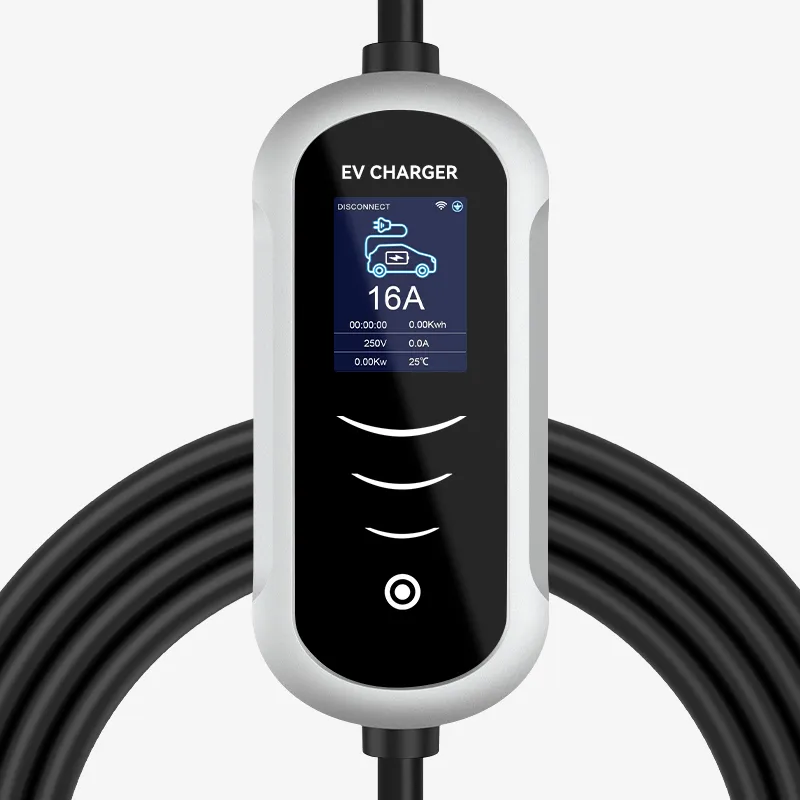
Eliminate Range Anxiety in Low-Infrastructure Areas with a Portable EV Charger
The Rural Charging Gap: Why 42% of U.S. Counties Lack Public DC Fast Chargers
Rural America faces a critical EV infrastructure deficit: nearly half of U.S. counties lack public DC fast charging stations, creating vast “charging deserts” where drivers risk battery depletion. Economic barriers—low population density and high installation costs due to rugged terrain—deter commercial investment. Aging utility grids in remote areas often lack the capacity to support high-voltage fast chargers. Without reliable infrastructure, drivers experience paralyzing range anxiety when traveling beyond urban corridors.
How Portable EV Chargers Bridge the Gap—Leveraging Ubiquitous 120V/240V Outlets as Reliable Power Sources
Portable EV chargers bypass these limitations by tapping into existing electrical infrastructure—standard 120V household outlets and widely available 240V connections at rural residences, campgrounds, farm buildings, and small businesses. While charging speeds (1.4–7.2 kW) are slower than DC fast charging, this accessibility provides essential redundancy. Drivers can add 15–30 miles of range per hour using outlets at bed-and-breakfasts, trailside cabins, or roadside lodgings—turning ordinary locations into impromptu charging points and eliminating dependency on sparse dedicated infrastructure.
| Charging Solution | Installation Cost | Availability in Rural Areas | Charging Speed |
|---|---|---|---|
| DC Fast Chargers | $100k+ | Limited (42% counties lack) | 60–100+ miles in 20 min |
| Portable EV Chargers | Minimal | High (uses existing outlets) | 3–7 miles per hour |
By converting ubiquitous outlets into reliable power sources, portable chargers provide a practical safety net where traditional infrastructure falls short.
Enable Spontaneous, Flexible Travel Itineraries Without Charging Station Dependency
From Campsites to Cafés: Real-World Examples of Off-Grid Charging Using Standard Outlets
Portable EV chargers unlock charging opportunities wherever standard 120V or 240V outlets exist—no reliance on fixed networks required. Campers top up at national parks via RV hookups; travelers charge at vacation rentals using exterior sockets; café owners increasingly welcome drivers to use exterior outlets during extended stops, adding 15–20 miles of range per hour while you enjoy a meal. This flexibility extends to wineries with dedicated parking outlets, marinas with shore power, and even roadside motels—transforming trip planning from charger-centric routing to destination-focused exploration.
Psychological Benefits: Confidence, Control, and Reduced Decision Fatigue on Long Trips
Beyond practicality, portable chargers deliver measurable psychological benefits. Knowing you carry backup power reduces range anxiety by 63%, according to EV Driver Insights (2024). This shifts decision-making: no more rerouting for chargers or skipping scenic attractions due to battery concerns. Drivers report heightened confidence when exploring rural areas or navigating weather disruptions. A Mobility Psychology Journal (2023) study found journeys involve 27% fewer charging-related decisions compared to fixed-station dependency—freeing cognitive energy to focus on the experience, not energy logistics.
Provide Critical Emergency Charging When Public Networks Fail or Are Unavailable
Incident Data: Near-Stranding Events and How Portable EV Chargers Prevent Them
Public charging networks remain unreliable: J.D. Power found 20% of non-Tesla public charging attempts failed in 2023, while ChargerHelp reported that 26% of U.S. stations displayed incorrect availability. These failures leave drivers vulnerable—especially during peak travel seasons or in remote regions. Portable EV chargers mitigate this risk by enabling emergency charging from any standard outlet. Real-world cases include travelers using portable units at roadside motels during grid outages and campers accessing power at national park facilities when commercial stations were over 50 miles away. What would otherwise be a tow-truck emergency becomes a manageable delay.
Balancing Speed and Portability: Understanding Realistic Output (1.4–7.2 kW) for Roadside Reliability
When selecting a portable EV charger, understanding realistic power output is essential. These devices typically deliver 1.4–7.2 kW—enough to add 4–25 miles of range per hour—striking a balance between portability and meaningful recovery:
| Output Level | Miles Added Per Hour | Typical Use Cases |
|---|---|---|
| 1.4 kW (120V) | 4–6 miles | Overnight hotel charging, emergency top-ups |
| 3.6 kW (240V) | 12–15 miles | Café stops during day trips, campground use |
| 7.2 kW (240V) | 22–25 miles | Quick roadside recovery, destination charging |
Higher-output models (7.2 kW) require NEMA 14-50 outlets but can restore significant range in just 1–2 hours. Crucially, all portable chargers operate independently of grid-dependent networks—leveraging existing electrical systems rather than specialized hardware—ensuring functionality even during regional power disruptions.
FAQ
1. What are the main advantages of using portable EV chargers in rural areas?
Portable EV chargers utilize widely available 120V and 240V outlets, providing backup power in areas where public charging infrastructure is minimal. They reduce range anxiety and offer flexibility for spontaneous travel.
2. How much range can I add using a portable EV charger?
Portable EV chargers provide 4–25 miles of range per hour, depending on the power output (1.4–7.2 kW). Higher-powered models are faster but may require specialized outlets.
3. Are portable EV chargers reliable in emergency situations?
Yes, portable EV chargers offer a critical safety net. They can be used even during grid outages or when public charging stations fail, ensuring that drivers are not stranded.
4. Can a portable EV charger fully replace public charging infrastructure?
No, portable chargers serve as a supplemental tool rather than a primary solution. They are essential for remote travel but are not a substitute for high-speed DC fast charging in urban or highway settings.
5. What factors should I consider when selecting a portable EV charger?
Choose based on power output (kW), compatibility with your vehicle, and the type of outlet available (e.g., standard 120V vs. higher-voltage NEMA 14-50 outlets).