
 EN
EN
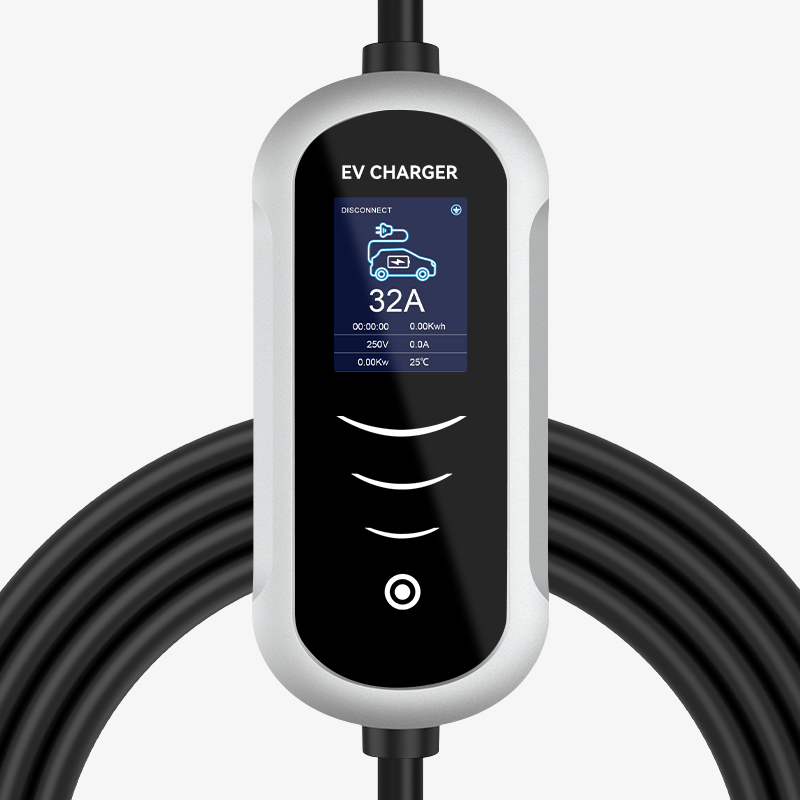
Residential EV Charger Adaptation: Matching Infrastructure, Lifestyle, and Housing Type
Electrical Readiness Assessment: Panel Capacity, Circuit Upgrades, and 120V vs. 240V EV Charger Deployment
Before installing an EV charger, homeowners must assess their home’s electrical readiness—especially critical in older homes with 100-amp service panels, which often lack capacity for Level 2 charging. Upgrading to a 200-amp panel (or higher) is frequently necessary to support the sustained 240V load safely. Dedicated 240V circuits deliver significantly faster charging—reducing full recharge times from over 24 hours on standard 120V outlets to just 4–8 hours—making them the practical choice for most residential use.
In multifamily housing, a community-wide survey of current and projected EV ownership helps determine aggregate power demand. Industry best practices recommend beginning with a balanced mix of Level 1 and Level 2 chargers, then scaling infrastructure as adoption grows. Urban apartment complexes may require transformer upgrades or submetering solutions, while suburban single-family homes benefit most from managed charging programs that shift loads to off-peak hours—avoiding costly retrofits and building a scalable, future-ready foundation.
User-Centric Configuration: Overnight Charging Patterns, Space Constraints, and Smart EV Charger Energy Management
Most residential EV charging occurs overnight, when vehicles sit idle for 8–10 hours—making Level 2 charging both convenient and sufficient for typical daily driving needs. However, spatial limitations—in garages, carports, or shared parking areas—demand compact, wall-mounted designs and strategic placement to maximize accessibility without compromising safety or workflow.
Smart EV chargers enhance usability through intelligent scheduling and real-time load management. Networked units can delay charging until off-peak utility rates apply, lowering costs and reducing strain on the home’s circuitry. In older homes with constrained panel capacity, built-in load-balancing automatically adjusts power distribution across appliances to prevent breaker trips. Emerging bidirectional capabilities (V2H) allow vehicles to supply backup power to the home, while integration with rooftop solar and home battery storage further optimizes self-consumption and resilience. Ultimately, user-centric configuration aligns daily mobility patterns, physical constraints, and forward-looking energy systems.
Commercial EV Charger Adaptation: Scalability, Usage Dynamics, and Power Requirements
Commercial environments present distinct challenges for EV charger deployment—requiring strategies tailored to high utilization, diverse user behavior, and complex power infrastructures. Success depends on aligning technical specifications with operational realities across sectors.
Workplace & Retail EV Charger Strategies: Dwell Time Alignment, User Volume Forecasting, and Level 2 AC Scalability
Workplaces and retail locations should match charger speed to average dwell time. Level 2 AC chargers (6.2 kW to 19.2 kW) are ideal for workplaces where vehicles park for several hours—and for retail centers where customers typically stay 30 minutes to 2 hours. To avoid congestion and underutilization, forecasting user volume is essential: industry data projects annual EV adoption growth of approximately 20% in commercial settings (Ponemon Institute, 2023). Modular, open-protocol hardware enables incremental expansion, while integrated energy management systems dynamically allocate power during peak demand—maintaining grid stability without sacrificing user experience.
Fleet and Hospitality EV Charger Integration: Three-Phase Power, Demand Forecasting, and Bidirectional Charging Readiness
Fleet depots and hospitality venues—including hotels and resorts—require higher-power, high-reliability solutions. Three-phase 208V/480V systems support up to 22 kW per port, enabling efficient overnight charging for multiple vehicles. Accurate demand forecasting is non-negotiable: medium-sized fleet operations routinely exceed 1 MWh of daily energy consumption. Future-proof installations include V2G/V2X-ready hardware, allowing participation in grid services during stress events. Robust thermal management, cellular or Ethernet connectivity, and >98% uptime targets ensure dependable performance in demanding, high-utilization environments.
Smart Technology Enablers for Adaptive EV Charger Performance
Networked EV Charger Systems: Real-Time Load Balancing, Grid Interaction, and Dynamic Energy Optimization
Modern networked EV charger systems function as intelligent nodes within a building’s electrical ecosystem—not just power delivery devices, but active participants in energy management. They enable real-time load balancing across multiple EVs and household appliances, preventing circuit overloads and eliminating the need for immediate panel upgrades. By interfacing with utility demand-response programs, these systems adjust charging rates in response to grid signals—supporting broader energy stability.
The greatest value lies in dynamic energy optimization: chargers prioritize schedules based on time-of-use electricity pricing, real-time solar generation, battery state of charge, and user preferences. This adaptive layer ensures efficient, safe, and cost-conscious energy distribution—whether across a single-family home or a multi-tenant commercial property—turning every EV charger into a responsive, integrated component of the modern energy landscape.
FAQ Section
Why is panel capacity important for EV charger installation?
Panel capacity determines whether your home's electrical system can safely support the additional load from an EV charger, especially for Level 2 chargers requiring 240V circuits.
What is the difference between Level 1 and Level 2 EV chargers?
Level 1 chargers use standard 120V outlets and are slower, taking over 24 hours to fully charge an EV. Level 2 chargers use 240V circuits, reducing charging time to 4-8 hours.
How can smart EV chargers save costs?
Smart chargers optimize energy usage by delaying charging to off-peak electricity rates, managing loads to prevent breaker trips, and integrating with solar storage systems for enhanced efficiency.
What considerations are important for commercial EV charger installation?
Key considerations include matching charger speed to dwell time, forecasting user volume for scalability, and ensuring high reliability with robust three-phase power systems.
What are bidirectional charging capabilities?
Bidirectional charging allows EVs to supply power back to the home or the grid, providing backup energy and participating in demand-response programs for enhanced energy resilience.