
 EN
EN
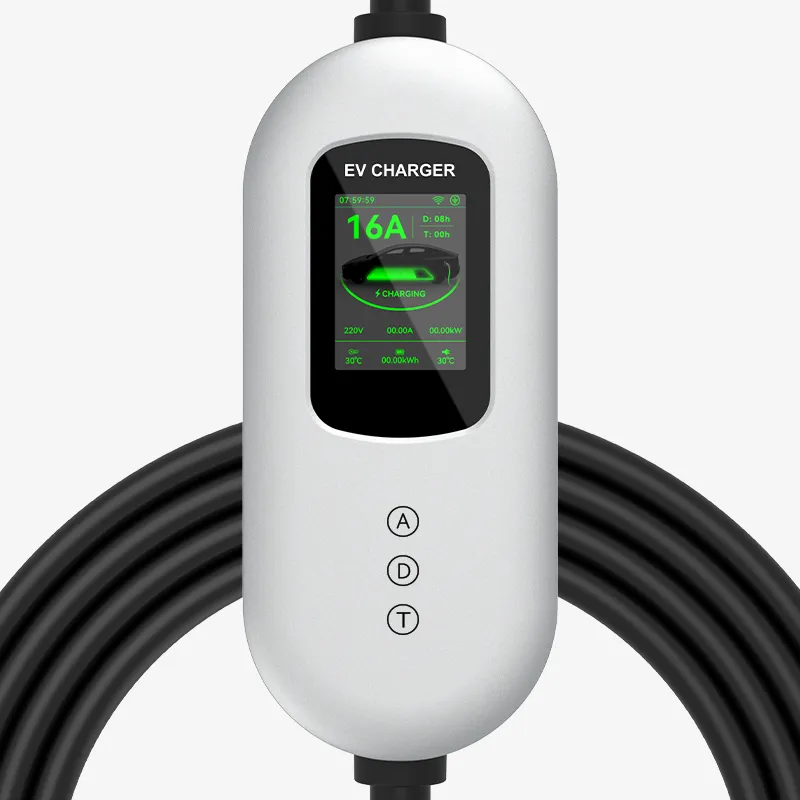
Assess Your Daily Driving Needs to Determine Optimal EV Charger Speed
Start by calculating your daily energy requirements. Multiply your round-trip commute distance by your electric vehicle’s efficiency—typically 3–4 miles per kWh (or ~0.25–0.33 kWh/mile). Most drivers cover 30–40 miles daily, consuming roughly 10–15 kWh. This calculation clarifies whether a basic Level 1 charger (1.4 kW, ~4–5 miles/hour) meets your needs—or if a faster Level 2 solution is essential for reliable overnight replenishment.
Calculate daily energy requirements based on commute distance and vehicle efficiency
Track your weekly mileage using your vehicle’s trip meter, including school runs, errands, and other local driving—these often add 10–20 miles beyond your commute. Active households rarely exceed 80 miles per day during routine use. Compare that total to your EV’s rated range (e.g., 250–350 miles for most new models) to estimate how frequently you’ll need to charge. For example, a driver averaging 60 miles/day in a 300-mile-range EV only needs to fully recharge every five days—making even a 32A Level 2 charger more than sufficient for overnight top-ups.
Compare Level 2 EV charger amperage options: 16A vs. 32A vs. 48A and real-world charging speed (miles/hour)
Level 2 chargers deliver significantly faster charging than standard outlets—but real-world performance depends on both amperage and your vehicle’s onboard charger capacity. Common configurations include:
- 16A chargers (~3.8 kW) add ~12–15 miles per hour—best for short commutes (<40 miles/day) or secondary vehicles
- 32A units (~7.7 kW) replenish ~25–30 miles per hour—ideal for most drivers covering 40–80 miles daily
- 48A systems (~11.5 kW) provide ~35–45 miles per hour—suited for long commutes, cold-weather use, or multi-EV households
Note: Many EVs (e.g., older Leafs, base-model Hyundais) have 6.6 kW onboard chargers, meaning they won’t benefit from >32A input. Always verify your vehicle’s maximum AC charging rate before selecting a higher-amperage unit. Higher amperage also requires confirming panel capacity—a critical step covered next.
Verify Home Electrical Infrastructure Compatibility for Safe EV Charger Installation
Evaluate panel capacity, dedicated circuit requirements (40A+), and voltage (240V) readiness
Before purchasing any Level 2 charger, a certified electrician must conduct a formal load calculation per NEC Article 220. This assessment determines whether your home’s electrical panel can safely support the added demand—especially important for older homes with 60A or 100A service. Most modern installations require a dedicated 240V circuit rated for continuous loads:
- A 32A charger needs a 40A breaker and 8 AWG copper wire
- A 48A unit requires a 60A breaker and 6 AWG copper wire
Your electrician will verify grounding integrity, existing load distribution, and voltage stability. Skipping this step risks nuisance tripping, overheated connections, or fire hazards—particularly when pairing high-power EV charging with other major loads like HVAC or electric water heaters.
Choose between plug-in (NEMA 14-50) and hardwired EV charger setups—including permitting and code compliance
You have two primary installation paths: plug-in (NEMA 14-50) or hardwired. Plug-in units offer flexibility—easy to replace or relocate—and use the same outlet as many electric ranges. However, they require GFCI protection, proper torque on receptacle terminals, and weather-rated enclosures for outdoor use. Hardwired chargers eliminate plug-related failure points, support higher amperages more reliably, and integrate seamlessly with weatherproof junction boxes—making them the preferred choice for permanent garage or exterior wall mounts.
Regardless of method, all installations must comply with the National Electrical Code (NEC) Article 625 and local permitting requirements. A licensed electrician should pull permits, schedule inspections, and document grounding continuity, clearance distances, and conduit protection. Doing so ensures long-term safety, avoids insurance complications, and preserves resale value.
Select a Smart, Certified EV Charger for Long-Term Reliability and Daily Convenience
Essential smart features: Off-peak scheduling, remote monitoring, energy cost tracking, and OTA updates
Today’s best EV chargers go beyond power delivery—they integrate intelligently into your energy ecosystem. Off-peak scheduling automatically aligns charging with utility time-of-use (TOU) windows, cutting electricity costs by up to 60% versus flat-rate or peak-period charging. Remote monitoring via smartphone apps lets you start/stop sessions, view real-time power draw, and receive notifications for faults or completion. Energy cost tracking correlates kWh usage with your rate plan, helping identify savings opportunities. Over-the-air (OTA) updates ensure ongoing compatibility with new grid services (like ISO demand response programs) and security patches—extending hardware life without physical intervention.
Safety, durability, and support: UL certification, thermal management, and meaningful warranty coverage (5+ years)
Always choose an EV charger certified to UL 2594 (the U.S. standard for EVSE) and compliant with NEC Article 625 requirements—including ground-fault circuit interrupter (GFCI) protection, tamper-resistant design, and IP65+ weather resistance for outdoor use. Robust thermal management—such as active cooling or adaptive power throttling—prevents degradation during extended summer charging or high-load winter sessions. Look for warranties of at least five years: a strong indicator of component quality and manufacturer confidence. Chargers lacking these safeguards carry elevated risk of premature failure, inconsistent performance, or safety incidents—issues that can cost over $740 to resolve, according to industry repair data compiled by the Electrical Safety Foundation International.
FAQs
How do I calculate my EV's daily energy requirements?
Multiply your round-trip commute distance by your EV’s efficiency, typically 3–4 miles per kWh. This helps determine the kWh needed for daily driving.
What’s the difference between Level 1 and Level 2 chargers?
Level 1 chargers provide ~4–5 miles of range per hour and are suitable for minimal daily driving needs. Level 2 chargers offer much faster charging, adding 12–45 miles of range per hour depending on the amperage and EV model.
Can all EVs use high-amperage chargers?
No, some EVs have lower onboard charger capacities (e.g., 6.6 kW), so a high-amperage charger may not provide additional benefits. Check your car’s specifications.
Do I need an electrician to install an EV charger?
Yes, a licensed electrician should verify your electrical panel’s capacity, perform load calculations, and ensure proper installation per NEC guidelines.
Are smart EV chargers worth it?
Yes, they offer features like off-peak scheduling, remote monitoring, and energy cost tracking, which improve convenience and save on electricity costs.
What’s the advantage of hardwired chargers over plug-in models?
Hardwired chargers are more reliable for high-power applications and integrate seamlessly into permanent installations, eliminating plug-related failures.
Table of Contents
- Assess Your Daily Driving Needs to Determine Optimal EV Charger Speed
- Verify Home Electrical Infrastructure Compatibility for Safe EV Charger Installation
- Select a Smart, Certified EV Charger for Long-Term Reliability and Daily Convenience
-
FAQs
- How do I calculate my EV's daily energy requirements?
- What’s the difference between Level 1 and Level 2 chargers?
- Can all EVs use high-amperage chargers?
- Do I need an electrician to install an EV charger?
- Are smart EV chargers worth it?
- What’s the advantage of hardwired chargers over plug-in models?