
 EN
EN
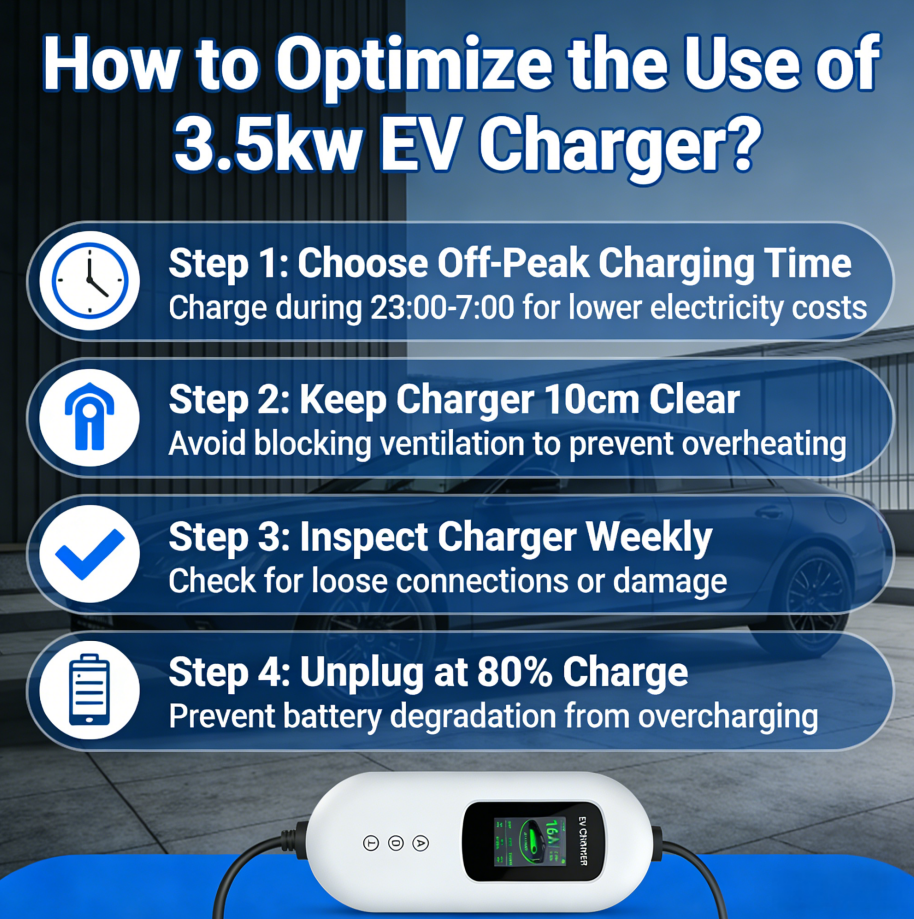
Why 3.5 kW AC Charging Is Strategically Valuable—Not Just 'Slow'
The Physics of 16A/230V AC Charging: Efficiency, Heat, and Safety Margins
An EV charger rated at 3.5 kW works on regular home electrical setups at 16 amps and 230 volts while keeping things cool enough to avoid damaging components. When it comes to heat buildup from resistance, these units generate less than 5% of what gets transferred overall. That's way better than those fast DC chargers above 50 kW which waste around 15 to 20% as heat, cutting down battery wear over time by roughly 30%. The 16 amp current is actually set 25% under what most household circuits can handle (which is typically 20 amps). This gives some breathing room so the system doesn't overheat when running all night. It all makes sense if we think about Ohm's Law basics really. Lower amperage means less I squared R losses, and that matters a lot when comparing to faster chargers that push over 32 amps. So for everyday drivers looking to protect their batteries without breaking the bank on electrical work, sticking with 3.5 kW charging makes good practical sense.
On-Board Charger (OBC) Limitations and Real-World AC-to-DC Conversion Losses
Every EV's On-Board Charger (OBC) governs AC-to-DC conversion, with most units capped between 3.7–7 kW. A 3.5 kW charger aligns closely with the lower end of this range—especially beneficial for budget or older EVs whose OBCs are inherently limited to ~3.5 kW. In practice, real-world losses occur across three stages:
- Grid-to-vehicle conversion (85–90% efficient)
- Battery management system overhead (3–5%)
- Thermal regulation during charging (2–4%)
This yields a net delivery of 2.8–3.1 kW to the battery—extending charge time modestly but avoiding OBC overloads and unnecessary conversion waste. Pushing higher-power AC chargers into vehicles with 3.5 kW OBCs delivers no meaningful speed gain and increases inefficiency.
Smart Home Charging Optimization for 3.5 kW EV Chargers
Off-Peak Tariff Alignment and Grid-Aware Overnight Scheduling
Smart scheduling during nighttime hours turns those 3.5 kW electric vehicle chargers into real money savers for homeowners while also helping strengthen the power grid. When people charge their cars between roughly 11pm and 7am, they usually pay anywhere from 30% to almost half what they would during regular business hours. Most folks already plug in at home anyway these days about 8 out of 10 times according to some research from Juniper back in 2026. That's where these intelligent charging systems come into play. They actually modify how fast the car charges depending on what's happening with the overall electricity demand across the region plus how much solar or wind power happens to be available locally at any given moment. The result? Lower bills without sacrificing convenience.
- Cost Reduction: Overnight charging saves $150–$300 annually versus daytime use
- Grid Stability: Distributed, time-shifted loads reduce strain on local transformers during peak demand
- Renewable Synergy: Solar owners can prioritize daytime surplus for direct EV charging before switching to off-peak grid power
Firmware-Based Smart Control: SOC Thresholds, Timers, and Load Balancing
The latest 3.5 kW chargers come with built-in software that handles most of the efficiency work automatically while keeping things safe. People can actually tell their charger when to stop filling up the battery, maybe something like "hold off at 80%" to keep from wearing it down too much. There are also timer functions that limit charging during certain periods when electricity rates are lower. What makes these units really stand out is how they watch what else is going on in the house. They figure out when there's extra power available and send it to the electric vehicle instead of letting it go to waste. This means homeowners don't have to choose between charging their car and using big appliances like electric ovens since the system prevents circuits from getting overloaded.
- Power redistribution occurs within 0.5 seconds, maintaining safe loads below 90% of circuit capacity
- Charging to 80% SOC instead of 100% extends battery lifespan by up to 25%
- Integrated monitoring delivers per-session kWh usage and cost breakdowns via mobile apps
Ideal Use Cases for 3.5 kW EV Chargers: Maximizing Fit and Flexibility
Long-Duration Parking Environments: Residential, Workplace, and Fleet Depots
When cars sit parked for six hours or more, the 3.5 kW charger really shines as the best option for most people. Most folks charge at home during the night when their vehicle isn't being used, typically getting around 28 to 35 kilowatt hours in those 8 to 10 hour windows, which covers about 40 miles of driving each day. At workplaces, installing these chargers means employees can top up their batteries throughout an entire workday, and companies with delivery fleets find them particularly useful since vehicles often have long breaks between deliveries. What makes this setup so attractive is that it doesn't require costly rewiring of electrical systems. Standard household circuits with 16 amps are compatible with both home garages and small business locations without any special modifications. According to data from the US Department of Energy released last year, roughly nine out of ten electric car owners stick to nighttime charging routines. This pattern works well because it keeps costs down, makes life easier for drivers, and puts less strain on the power grid overall.
Solar-First & Off-Grid Integration: Inverter Compatibility and Renewable Yield Matching
The 3.5 kW charger models work really well with both solar installations and completely off-grid power systems. When looking at how much electricity they need, these chargers fit nicely within what most home inverters produce between 3 and 5 kW around noon time. This compatibility allows for either DC or AC coupling methods that reduce energy loss during conversions by about 12 to 15 percent when compared to just using grid power for charging, according to research from NREL back in 2024. For those living off the grid, there's another advantage here too. The relatively small amount of power needed means that filling up a standard 60 kWh battery takes roughly 17 hours, which plays out quite nicely alongside typical generator operation periods. And smart control systems take this even further by adjusting the charging rate based on whatever solar power happens to be available at any given moment. This kind of dynamic approach lets homeowners get close to maximum renewable energy usage rates, sometimes reaching as high as 98%, all while avoiding the need for huge battery storage solutions.
| Environment | Charge Duration | Energy Added | Grid Impact |
|---|---|---|---|
| Residential | 8–10 hours | 28–35 kWh | Low (off-peak) |
| Workplace | 8 hours | 28 kWh | Moderate |
| Solar-Integrated | 5 peak sun hours | 17.5 kWh | None |
Accurate Charging Time Estimation and Real-World Efficiency Calibration
Getting good at predicting charging times is important stuff, but let's face it - most calculations don't match what actually happens in the real world. Temperature changes throughout the day, batteries getting older over time, and those little voltage ups and downs all throw off the standard 3.5 kW rating we see on paper. Just converting AC to DC power eats up around 10 to 15% of what should be available, so what ends up reaching the battery is usually somewhere between 2.8 and 3.1 kW instead. If anyone wants better estimates, they need to factor in these real life variables when making their calculations.
- State of Charge (SoC) calibration: Uncalibrated battery management systems can distort time projections by up to 20%; monthly recalibration mitigates cumulative error
- Thermal impact on charging curves: Below 10°C, lithium-ion batteries charge 15–30% slower due to increased internal resistance
- OBC aging: Conversion efficiency drops ~3–5% per 1,000 full cycles, gradually extending required charge duration
| Factor | Impact on Charging Time | Mitigation Strategy |
|---|---|---|
| Battery degradation | +25–40% over lifespan | Monthly efficiency recalibration |
| Low voltage supply | +15–25% | Voltage stabilization equipment |
| High ambient heat | +10–15% | Thermal management systems |
Precision improves significantly when dynamic load monitoring tools feed real-time efficiency metrics into scheduling logic. For homes and workplaces with consistent overnight windows, this enables tighter tariff alignment—maximizing savings while preserving battery health.
FAQ
Q1: Why is a 3.5 kW charger considered efficient for home use?
A 3.5 kW charger operates at lower amperage, minimizing heat loss and protecting electrical systems. This efficiency not only protects the battery but also reduces costs and avoids extensive electrical upgrades.
Q2: What real-world factors affect the charging time of an EV using a 3.5 kW charger?
Factors like temperature variations, battery age, and AC-to-DC conversion losses can affect charging times. It's key to consider these for accurate time and cost estimates.
Q3: How does smart scheduling benefit those using 3.5 kW chargers?
Smart scheduling exploits off-peak electricity pricing, reduces grid strain, and supports the use of renewable energy sources, thus lowering costs and enhancing convenience.
Q4: Can a 3.5 kW charger be effectively used with solar or off-grid systems?
Yes, these chargers are compatible with solar and off-grid setups, efficiently using the power generated and minimizing the need for extensive battery storage.