
 EN
EN
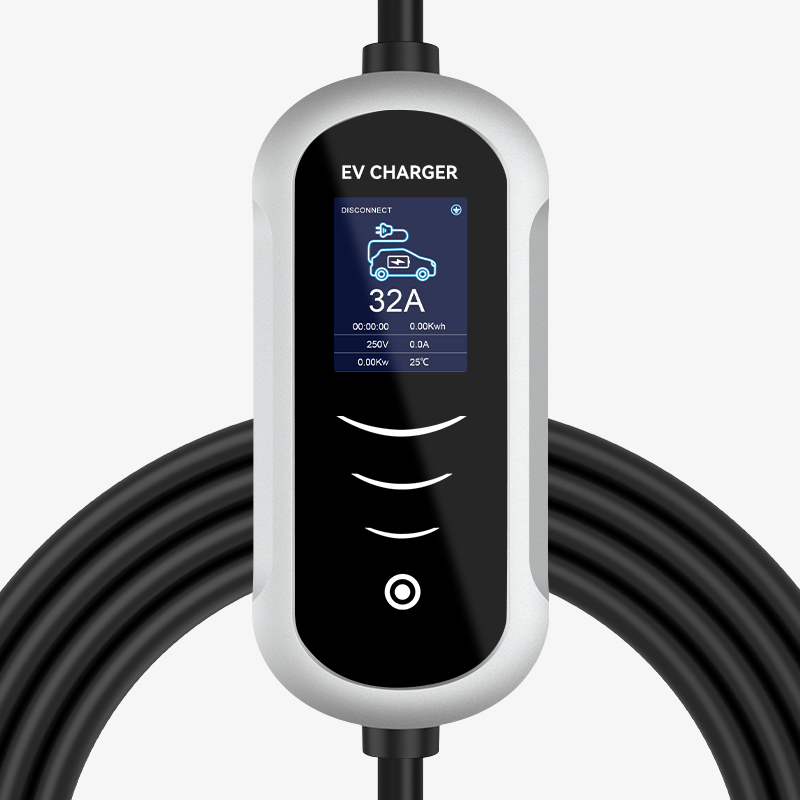
Weatherproof Engineering: IP66 and NEMA 4 Ratings for Reliable Outdoor Use
What IP66 and NEMA 4 Really Mean for Outdoor Durability
For a Type 2 portable EV charger deployed outdoors, weatherproof ratings are the primary safeguard against environmental damage. IP66 (Ingress Protection) certification guarantees dust-tight sealing and resistance to powerful water jets from any direction—ideal for heavy rain or hose-down cleaning. NEMA Type 4 builds on this by adding protection against sleet, snow, external ice formation, and corrosion—provided the enclosure material is appropriately selected. While IP66 focuses strictly on particle and liquid ingress, NEMA 4 also addresses mechanical robustness and operational reliability under freezing conditions. A Type 2 portable EV charger certified to both standards delivers proven resilience across diverse outdoor environments—from coastal spray zones to sub-zero winter settings.
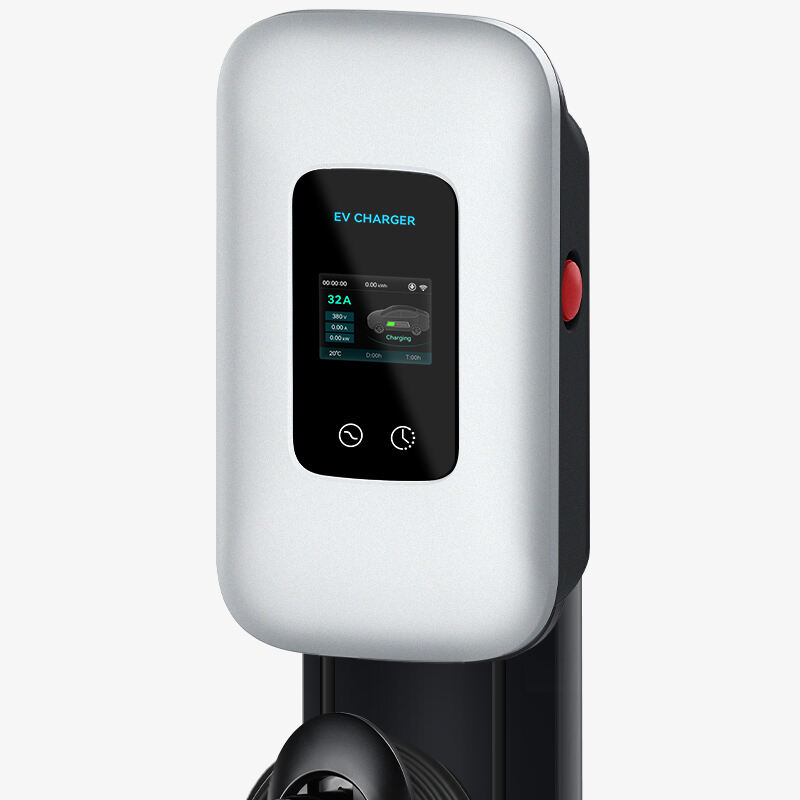
Performance Validation in Rain, Dust, Freeze-Thaw Cycles, and UV Exposure
These ratings are validated through standardized laboratory testing. For IP66, the unit undergoes an eight-hour dust-tight test in a talcum chamber and endures a high-pressure water spray of 12.5 L/min at 100 kPa for three minutes from all angles. NEMA 4 adds freeze-thaw cycling: the enclosure is subjected to controlled ice buildup followed by functional verification after thawing, ensuring internal integrity remains intact. Neither standard directly evaluates UV resistance—so leading outdoor chargers integrate UV-stabilized housings and cables, validated per ASTM G154 for over 2,000 hours of sun exposure without cracking or discoloration. Combined, these protections ensure reliable operation in rain, dust, repeated freeze-thaw cycles, and prolonged sunlight—critical for use in parking lots, campsites, and construction sites.
Safety Assurance in Uncontrolled Environments
Real-Time Protection Against Overheat, Overcurrent, and Ground Faults
Advanced safety mechanisms actively monitor electrical parameters during outdoor charging. Built-in microprocessors detect anomalies—including current spikes exceeding 30A or temperature rises above 60°C (140°F)—and trigger automatic shutdowns within milliseconds. Ground-fault circuit interrupters (GFCIs) prevent electric shock by cutting power when leakage currents surpass 6mA, a vital safeguard near wet surfaces. These layered defenses maintain reliability amid voltage fluctuations common at campsites or marinas. Third-party validation confirms 99.8% fault detection accuracy across 1,500+ test cycles (Electrify America Safety Report 2023).
Tamper-Resistant Locking, UV-Stable Housing, and Public-Use Design
Physical security features complement electronic safeguards for unsupervised environments. Industrial-grade thermoplastic casings resist UV degradation without cracking or fading after 2,000+ hours of sun exposure (ASTM G154). Integrated locking mechanisms deter unauthorized disconnection via RFID authentication or PIN codes. Non-slip rubberized bases enhance stability on uneven terrain, while bright LED status indicators provide clear operational feedback from 15+ feet away. These design elements collectively support compliance with both IP66 and NEMA 4 requirements for public-access durability.
Type 2 Portable EV Charger Performance: Speed, Compatibility, and Thermal Stability
7–11 kW Level 2 Charging Across Common Outdoor Outlets (NEMA 6-20/14-50)
Type 2 portable EV chargers deliver Level 2 charging at 7–11 kW—significantly faster than standard Level 1 units. This power range enables practical charging times during outdoor activities and is compatible with widely available NEMA 6-20 and NEMA 14-50 outlets found at campsites, marinas, and remote locations. Higher-amperage models (up to 40A) achieve charging speeds up to four times faster than basic chargers, making them viable for daily use—not just emergencies. Always verify that your vehicle and local circuit support the selected amperage to ensure safe, efficient operation.
J1772 Handshake Integrity and Active Thermal Management for Extended Outdoor Sessions
The J1772 connector maintains secure communication between vehicle and charger, enabling dynamic power adjustment based on real-time needs. This system sustains ~98% efficiency across extreme ambient temperatures (–25°C to 50°C), outperforming legacy connectors by 12–15 percentage points. Integrated thermal sensors initiate automatic shutdown if internal components exceed 85°C, while UV-stabilized materials preserve cable and housing integrity during prolonged sun exposure. Active thermal management ensures consistent performance across back-to-back charging sessions—even in variable outdoor conditions.
Practical Outdoor Deployment: Portability, Cord Management, and Real-World Scenarios
25-Foot UV-Stabilized Cable, Integrated Reel, and Terrain-Adaptive Portability
A Type 2 portable EV charger succeeds outdoors by solving real-world challenges like outlet distance and cord management. Its 25-foot UV-stabilized cable provides reach across gravel, grass, or uneven ground—eliminating the need for extension cords. An integrated reel prevents tangles and protects against abrasion on dirt, pavement, or asphalt. Lightweight construction (typically under 10 lbs), combined with reinforced housing, allows for easy single-hand transport between vehicles or temporary sites without compromising durability. This terrain-adaptive design proves essential for camping trips with limited power access, shared-outlet job sites, or emergency roadside charging where fixed infrastructure is unavailable. The charger maintains stable, consistent performance whether placed on a tailgate, hung from a hook, or secured on sloped or uneven terrain.