
 EN
EN
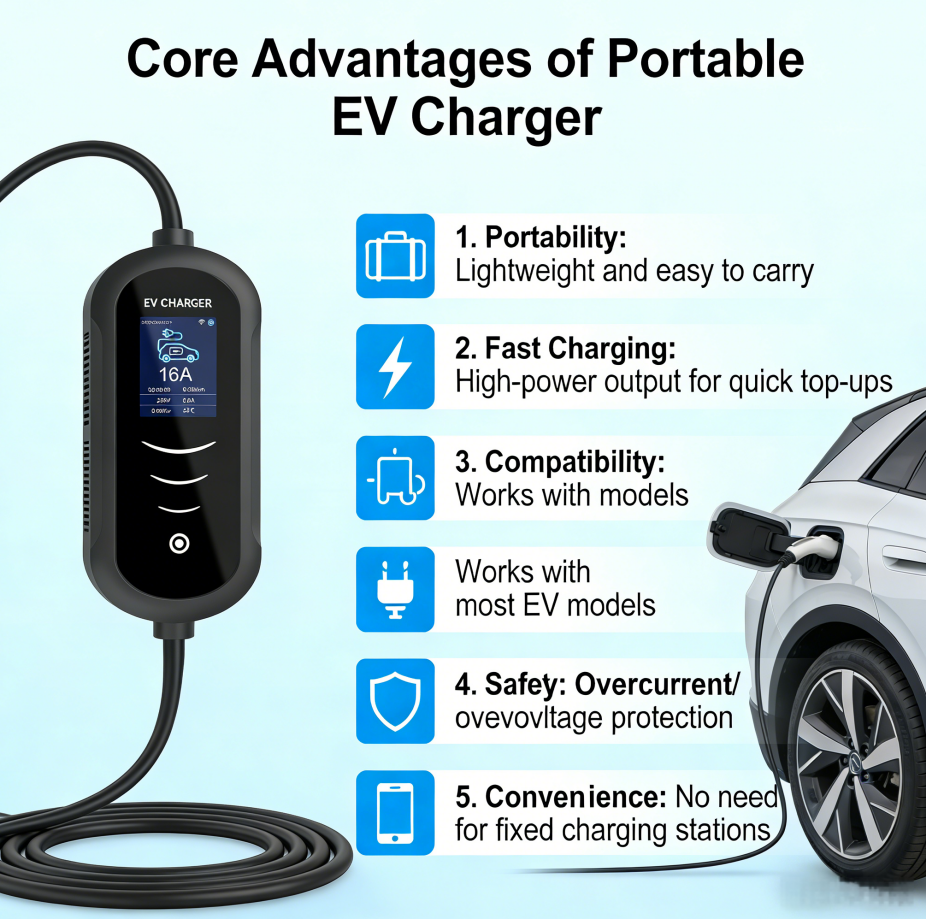
Unmatched Flexibility: Charge Anywhere with a Portable EV Charger
Bridging Infrastructure Gaps During Travel and Daily Commutes
Portable EV chargers are putting an end to those frustrating "charging deserts" by transforming regular electrical outlets into quick charging spots wherever someone might find themselves stranded - think parks, rest stops along highways, even out in the middle of nowhere at a cabin. The numbers tell the story too: around 40 percent of all U.S. counties still don't have proper public charging stations according to last year's report on EV infrastructure. That makes these portable options absolutely necessary for both road trip enthusiasts and people who commute every day but can't count on having access to charging at work or home. When folks aren't tied down to specific charging stations anymore, research shows they experience about two thirds less range anxiety, as various mobility studies have confirmed. At less than 15 pounds each and small enough to fit in most car trunks, these little devices pack serious durability while remaining easy to carry around when needed.
Dual-Voltage Compatibility (NEMA 5-15P & 6-20P) for Universal Outlet Use
The auto sensing voltage tech lets devices switch back and forth between regular 120V outlets (like those NEMA 5-15P ones we see everywhere) and the heavier duty 240V stuff (those NEMA 6-20P plugs) without needing anyone to mess with settings manually. What this really means is that folks can take the same gadget from their home outlet when they need a quick charge, plug it into an RV park or even a clothes dryer socket for much faster 240V charging speeds that beat 120V by about 150%, and still get good performance at commercial locations with industrial grade power points. Inside these devices are thermal sensors that keep checking what's going on with the electrical load and surrounding temperature conditions. If something looks off track, like voltage fluctuations or getting too hot, the system will dial back power automatically. This kind of safety feature matters a lot in places where the electrical grid might be old or not very reliable.
Plug-and-Play Simplicity and Cost Savings vs. Fixed Home Charging Stations
No Installation Hassles: Skip the Electrician and Save ~70% on Upfront Costs
Portable EV chargers don't need any installation work whatsoever. No permits required, no need to upgrade wiring, and absolutely no electrician involvement needed either. When we look at Level 2 home charging stations though, the story changes completely. These usually set people back somewhere between $1,150 to maybe around $2,750 when everything's factored in including all the hardware costs plus actual labor charges from professionals. High quality portable options can offer pretty much the same features as those expensive models, but they come in at about thirty percent of what most folks would spend on installing one of those permanent setups. This makes owning an electric vehicle much more feasible for many different types of consumers, especially those watching their budgets closely, apartment dwellers who might not have access to private garages, or anyone living in city areas where finding consistent parking space itself remains a daily challenge.
Under-60-Second Setup Enables Immediate, Barrier-Free EV Adoption
Getting it set up is super quick really takes under a minute most of the time just unpack everything, plug it into any standard wall outlet (the kind with two flat slots), then hook it up to the car. No need to wait around for someone to come check things out, no hiring electricians to run new wires through walls, no messing with the building itself at all. Just plug and go right away with dependable power. Makes sense why so many people are jumping on board these days especially those living in apartments, folks who only drive occasionally, or anyone else hesitant about installing something permanent in their home or workplace.
Reliable Emergency Backup: Portable EV Charger as Grid-Outage Resilience
Critical Redundancy When Home Stations Fail or Grids Go Down
Fixed home chargers can't always be relied on when there's a power outage, storm damage hits, or something breaks down. That's where portable charging units come into play as quick backups that work independently. These portable options pull energy from various sources like generators, those big battery packs people carry around, or sometimes even solar systems connected properly. What makes them so valuable is they don't depend on the regular electricity grid at all. For folks needing to stay mobile during tough situations like getting out of flooded areas, transporting patients who need urgent care, or delivering essential supplies across town, having access to charge their vehicles becomes absolutely critical. Being stuck without power just isn't an acceptable outcome in these kinds of real world emergencies.
Integrated Safety Stack Ensures Safe Operation in Uncontrolled Environments
Portable EV chargers are built to handle all sorts of unpredictable situations out there. Top models come with multiple layers of safety protection. For instance, Ground Fault Circuit Interrupters, or GFCIs as they're called, can shut off power almost instantly if they detect any kind of electrical leakage. There are also thermal sensors that kick in when things start getting too hot, especially important since load conditions can change so much. And most units have enclosures rated at least IP65, sometimes better, which means they stand up pretty well against rain, dirt, and other stuff that gets thrown around. All these safety measures work together so people can charge their vehicles confidently even in places where conditions aren't ideal. Think about stopping by the side of a wet road or trying to get power back after a storm hits. These chargers don't need special outlets or someone with expertise watching over them the whole time.
FAQs about Portable EV Chargers
What types of outlets can I use with a portable EV charger?
Portable EV chargers are compatible with both 120V and 240V outlets. This means you can use them with standard household connections (NEMA 5-15P) or industrial-grade outlets (NEMA 6-20P).
How fast can a portable EV charger charge compared to home stations?
Portable EV chargers can match the speed of Level 2 home chargers, especially when using 240V outlets, which are about 150% faster than 120V charging.
Are portable EV chargers safe to use in unpredictable environments?
Yes, they are equipped with multiple safety features such as GFCIs and thermal sensors to ensure safe operation even in uncontrolled or adverse conditions.
Do I need a professional to install a portable EV charger?
No, portable chargers require no professional installation. They are plug-and-play devices that can be simply used with any compatible outlet.