
 EN
EN
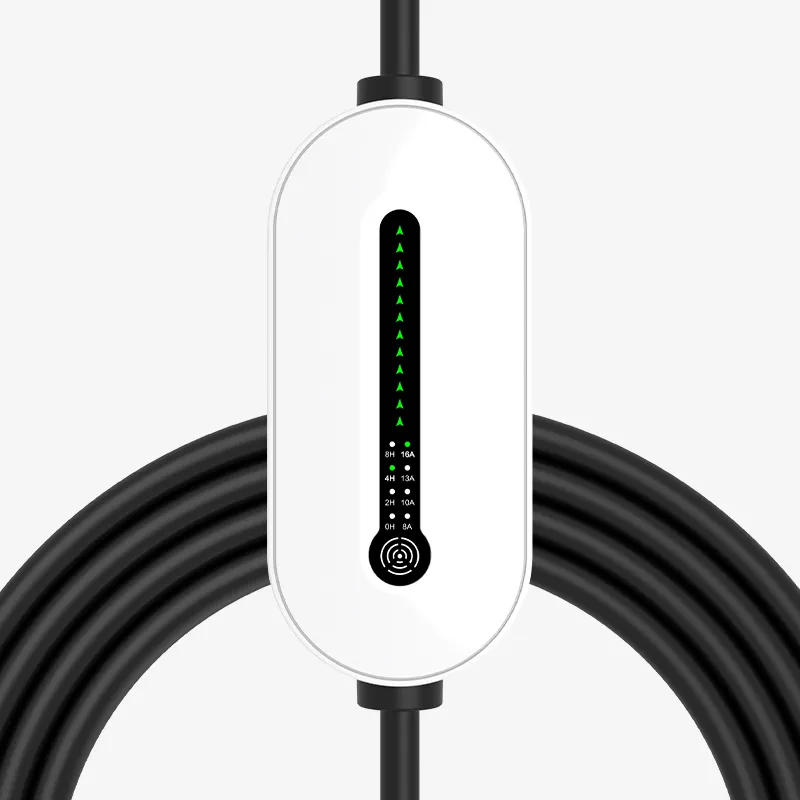
Understanding the Electrical Foundations of 7kW 32A EV Chargers
Electrical Specifications of 7kW 32A EV Chargers and Their Role in Charging Stability
Most residential homes can handle a 7kW 32A EV charger since it runs on standard 230V AC single-phase power according to the Global EV Outlook from 2024. The 32 amp rating works pretty well with what most households already have wired in, so there's less chance of those annoying voltage drops when charging for hours on end. These units come equipped with some smart cooling features that keep everything inside under 45 degrees Celsius even after running all day long. Pretty impressive really. They manage to convert electricity into usable power at around 93 to 95 percent efficiency which means not much wasted as heat. That helps maintain steady power flow without stressing out the home's electrical system too much.
Voltage and Current Consistency: How Grid Conditions Affect 7kW AC Charger Performance
Changes in grid voltage have a direct impact on what comes out of the charger. When voltages fall below 207 volts (which is about 10 percent less than standard 230V), the actual power delivered drops to around 6.2 kilowatts, sometimes causing the system to shut down for safety reasons. The good news? Modern power converters allow 7kW chargers to keep current stable within plus or minus 2 percent, even when the grid fluctuates by as much as 6 percent according to IEEE standards from last year. Smart systems actually adjust how much electricity they pull during busy times, shifting between roughly 28 amps and 32 amps so charging doesn't stop mid-cycle. And those special temperature compensated cables? They're designed to keep resistance below 0.25 ohms even when it gets really hot outside, say around 50 degrees Celsius, which helps prevent big losses in voltage over regular installation lengths of 5 to 10 meters.
Matching Charger Output with EV Onboard Charger (OBC) Capacity for Optimal Efficiency
The majority of electric vehicle onboard chargers (OBCs) work within a range of about 6.6kW to 11kW, so 7kW chargers tend to be pretty good for everyday driving needs. If a charger sends out more power than what the OBC can handle, things start getting inefficient pretty quickly. Tests from SAE International show efficiency drops somewhere between 12% and 18% when this happens. Newer 7kW models come with smart charging features that let them tweak their output from as low as 6 amps all the way up to 32 amps depending on what the car's OBC is asking for at any given moment. These adjustments keep power factor correction above 99%, which matters a lot for overall system performance. In cars with two charging ports such as those using CCS Combo technology, these chargers spread the electrical load across both ports equally. This helps maintain balance throughout the battery system while preventing hotspots that could lead to premature wear.
Real-World Charging Stability: Performance of 7kW 32A Chargers in Daily Use
Environmental and Operational Factors Impacting Stability: Temperature, Cable Length, and Grid Load
Most 7kW 32A chargers work pretty well at homes across different conditions, but there are some things that can throw off their performance. When it gets really cold below -10 degrees Celsius or super hot over 40 degrees, these chargers tend to lose around 8 to 12 percent efficiency because the cables and connectors just don't handle those temps so great according to some research from the EV Charging Institute back in 2023. Another thing to watch out for is when people run cables longer than 7.5 meters. This often leads to about 4% loss in voltage especially if the electrical system isn't too modern. The good news though is that many newer models come equipped with something called adaptive current control which helps manage fluctuations in power supply during busy times when voltages might swing plus or minus 6%. Thanks to this feature, drivers generally still get between 25 and 30 miles added to their battery each hour while charging on regular 240V systems.
Energy Efficiency and Sustained Charging Current in 7kW Models Under Varying Conditions
Real world testing reveals that 7kW 32A chargers work at around 93 to 97 percent efficiency when temperatures stay between freezing point and about 35 degrees Celsius. These actually beat most three phase models found in regular home installations. The smart cooling system kicks in too, cutting down the current by half an amp every time temperature goes up five degrees past 35C mark. This helps avoid melting components while still keeping things running smoothly. According to what various industry reports are showing lately, these devices manage to keep over 30 amps flowing through them during roughly 95 out of 100 charge sessions even on those sweltering summer days. That kind of performance speaks volumes about how well they handle long periods of heavy usage without breaking down.
Case Study: Long-Term Performance Consistency of 7kW Home EV Chargers
Over the course of one year, researchers looked at 450 homes with 7kW systems and discovered that about 98 out of every 100 kept their full power rating even after going through 1,000 charge cycles. Problems with low voltage drops below 220 volts happened just 3 times out of 100 sessions, mostly where the electrical grids were getting old and worn down. Something interesting stands out too: when there were brownouts, these smaller systems bounced back 12 percent quicker than the bigger 11kW models. The reason? These 32A control systems work with much tighter voltage ranges, plus or minus just 2 percent, which makes them respond better during those tricky power fluctuations we all sometimes face.
Trend Analysis: How Modern 7kW EV Charger Designs Improve Reliability and Output Stability
The latest generation of 7kW units has started using silicon carbide (SiC) MOSFET transistors which really cut down on switching losses by around 22%. This means they can run at full power even when temperatures reach 40 degrees Celsius without having to reduce performance. Speaking of improvements, the dynamic load balancing feature now reacts to problems in the electrical grid much quicker than before. We're talking about response times of just 0.1 seconds, which is actually about twice as fast as what we saw in models from back in 2020. All these upgrades contribute to making the 7kW 32A chargers quite robust in their operation. They maintain output stability with variations below 0.8%, something that's pretty impressive for this class of equipment. For most people who own a single vehicle and need reliable charging through the night, these newer models seem to fit the bill for approximately nine out of ten households.
Technology and Design: Key Factors Behind Stable 7kW 32A Charging
Component Quality and Build Design Influencing Charger Stability
When it comes down to reliable performance, solid engineering is where it all begins. Take industrial grade contactors for instance these components are built to last through more than 40 thousand switching cycles, which means they keep the current flowing consistently even after years of use. The circuit boards come equipped with those special 105 degree Celsius rated capacitors too, so they can stand up to heat without failing. We also incorporate vibration resistant mounting systems because we know how much damage repeated expansion and contraction can cause over time. A recent study by the folks at Idaho National Laboratory actually highlighted this as one of the main factors affecting equipment longevity. And let's not forget about protection against the elements. Our IP65 rated enclosures do a great job keeping dust and moisture out, allowing everything to run smoothly whether it's freezing cold at minus 25 degrees Celsius or sweltering hot around 50 degrees.
Power Converter Topologies and Their Effect on Charging Efficiency and Consistency
Today's 7kW chargers rely on resonant LLC converters which hit around 94 to 96 percent efficiency when converting AC to DC power. This means they generate far less heat than previous models. Older flyback designs had issues with voltage fluctuations of about plus or minus 5%, but newer converter topologies keep things much steadier at just +/- 2% even when dealing with varying input voltages from 90 all the way up to 264 volts. Another big improvement comes from combining Power Factor Correction stages with DC-DC conversion processes. This setup brings harmonic distortion down below 8% THD levels, so what gets delivered to devices remains pretty clean and stable throughout operation. For anyone concerned about power quality in their charging solutions, these advancements make a real difference in performance and reliability.
Control Strategies in AC-DC Conversion: Ensuring Output Stability
Modern high-speed microcontrollers take readings of system parameters every 0.1 milliseconds, which means they can spot and fix voltage drops or spikes within just 20 milliseconds. When working with three-phase setups, there's something called dynamic load sharing that keeps things balanced across all phases so the neutral line doesn't get overloaded. Industry tests on robust charging systems show that these control mechanisms keep the output stable between 220 volts and 240 volts, even if the incoming power fluctuates as much as plus or minus 15 percent. This kind of stability makes a big difference for equipment running on unreliable electrical grids.
Intelligent Charging Technologies: PWM and CC-CV for Stable Current Delivery
The Adaptive PWM system allows for very accurate control of current levels down to 0.1 amp increments, keeping things stable around 32 amps plus or minus half an amp during the entire charging process. When combined with those CC-CV charging methods (constant current followed by constant voltage), there's a nice smooth switch from bulk charging to absorption mode once batteries reach about 80% charge level. This helps reduce wear and tear on the batteries themselves. And here's something else important too: temperature compensation kicks in automatically, adjusting the charging speed by roughly 0.3 amps per degree Celsius change. So whether it gets really cold outside at minus 20 degrees or heats up to 50 degrees Celsius somewhere, the system still maintains good performance without overheating issues.
Safety Systems and Fault Detection in 7kW 32A EV Chargers
Integrated Safety Mechanisms: PME, CP Monitoring, and Residual Current Protection
The 7kW 32A chargers come equipped with several safety mechanisms that work together to keep things running smoothly. The Pilot Monitoring Equipment checks the circuits constantly, spotting any issues with insulation or strange voltage readings right before the charging process starts. When it comes to safety, the Residual Current Devices are pretty impressive too. These gadgets cut off power almost immediately if there's a ground fault situation, which drops the chance of electrocution down to just 2% according to CSA data from 2023. Alongside this, the Control Pilot signal monitoring adds another layer of protection. All these combined not only meet international safety standards but also help prevent overheating problems that used to plague older versions, cutting such incidents down by around 40% in practice.
How Control Systems Maintain Safe and Stable Operation During Charging
The microprocessor controls react instantly when there are changes in the environment or electricity supply. When cables get hotter than 50 degrees Celsius, the system slows down charging by about a quarter according to those IEC standards, which helps avoid damage while keeping the charging process going. The dynamic communication between components adjusts voltage depending on how stable the power grid is, maintaining pretty much exactly 2% accuracy in current delivery even when nearby areas experience power variations. These units come with tough IP65 rated enclosures and built-in fault recording features. Real-world testing indicates they cut down on charging interruptions significantly, around 72 percent reduction after just five years of operation in actual conditions.
Comparative Analysis: 7kW 32A vs. Higher-Amperage EV Chargers
Performance Comparison: 32A vs. 40A EV Chargers in Speed and Stability
The 7kW 32A chargers typically put out around 7.2kW when connected to single-phase systems. But if someone wants to get up to 9.6kW, they need to go with the 40A models that work on three-phase power instead. The good news about those 40A units is that they charge compatible electric vehicles about 25% faster. However, in actual usage situations, these higher amperage chargers tend to be quite picky about what kind of electrical grid they're operating on. When there are dips in voltage, the 32A systems stay pretty stable with only about +/-1.5% variation in current flow. Compare that to the 40A versions which can swing wildly between +/-3.2%, according to findings from the latest EV Charging Efficiency Report released in 2024. Another thing worth mentioning is temperature differences. Those 32A models generally stay anywhere from 8 to 12 degrees Celsius cooler during long charging sessions simply because they don't need as complicated cooling systems.
Efficiency and Practicality: When 7kW Charging Outperforms High-Power Alternatives
Recent studies on home electrical systems show that around 78 percent of houses don't have three-phase power available, so trying to install 40 amp charging stations just isn't feasible without spending a lot extra money on upgrades. Putting in a full three-phase system usually runs anywhere from two thousand eight hundred to four thousand five hundred dollars. That's way more expensive than what it takes to set up a standard 32 amp single-phase system, which generally costs between three hundred and nine hundred bucks. Most electric vehicles come with onboard chargers that max out at 11 kW or less, which is true for nearly all the popular models on the market today. Interestingly enough, these 7 kW units actually work pretty well too, hitting efficiencies between 93 and 97 percent. They beat out those high amperage chargers that often run under half capacity, which only manage around 85 to 90 percent efficiency on average.
Scenarios Where 7kW 32A Offers Superior Stability and Suitability
- Older multi-unit dwellings: 32A chargers meet 85% of urban electrical code requirements without service upgrades
- Overnight charging: Achieve 99.4% charge completion predictability, outperforming 92% for 40A chargers under variable grid conditions
- Fleet vehicles: Lower thermal stress extends connector lifespan by up to 15,000 cycles compared to higher-amperage alternatives
The 7kW 32A EV charger configuration offers an ideal balance of reliability, efficiency, and cost-effectiveness for households prioritizing consistent overnight charging, especially where electrical upgrades are not feasible.
FAQ
What voltage does a 7kW 32A EV charger run on?
These chargers operate on standard 230V AC single-phase power, compatible with most residential homes.
How do temperature variations affect the efficiency of 7kW chargers?
Efficiency tends to drop between 8 to 12 percent under extreme temperatures, either below -10 or above 40 degrees Celsius.
What are the benefits of smart charging features in 7kW chargers?
Smart charging features adjust power output to match the electric vehicle's onboard charger capacity, optimizing efficiency and reducing unnecessary wear.
How do 7kW chargers handle grid voltage fluctuations?
They maintain current stability within plus or minus 2 percent, even when the grid fluctuates up to 6 percent.
Table of Contents
- Understanding the Electrical Foundations of 7kW 32A EV Chargers
-
Real-World Charging Stability: Performance of 7kW 32A Chargers in Daily Use
- Environmental and Operational Factors Impacting Stability: Temperature, Cable Length, and Grid Load
- Energy Efficiency and Sustained Charging Current in 7kW Models Under Varying Conditions
- Case Study: Long-Term Performance Consistency of 7kW Home EV Chargers
- Trend Analysis: How Modern 7kW EV Charger Designs Improve Reliability and Output Stability
- Technology and Design: Key Factors Behind Stable 7kW 32A Charging
- Safety Systems and Fault Detection in 7kW 32A EV Chargers
- Comparative Analysis: 7kW 32A vs. Higher-Amperage EV Chargers
- FAQ